On Wednesday, January 28, 2026, With Honor Action submitted a Statement for the Record for a legislative hearing in support of H.R. 4105, Veterans Energy Transition (VET) Act of 2025 , and H.R. 2878, Daniel J. Harvey, Jr. and Adam Lambert Improving Servicemember Transition to Reduce Veteran Suicide Act.
The Veterans Energy Transition (VET) Act of 2025
Led by For Country Caucus members Rep. Jen Kiggans (R-VA), a Navy veteran, and Rep. Chrissy Houlahan (D-PA), an Air Force veteran, this legislation would expand the pipeline of skilled workers by enabling veterans, separating service members, and military spouses to transition into critical roles across the energy and advanced manufacturing sectors.
Key Provisions:
Creates a Department of Labor grant program for energy and advanced manufacturing companies that hire eligible separating service members, veterans, and spouses.
Provides up to $10,000 per hire and $500,000 per employer annually for training, certification, relocation, and onboarding expenses.
Prioritizes veterans with service-connected disabilities or experiencing homelessness.
Authorizes $60 million for the program for each of Fiscal Years 2026 through 2031, with a 15% cap on administrative costs
The Daniel J. Harvey, Jr. and Adam Lambert Improving Servicemember Transition to Reduce Veteran Suicide Act
Led by For Country Caucus member Rep. Zach Nunn, a currently serving Iowa Air National Guardsman, this legislation would ensure separating service members and veterans have clear, timely access to mental health resources by expanding information and hands-on assistance during and after their transition to civilian life.
Key Provisions:
Requires that counseling provided under the Department of Defense’s (DoD) Transition Assistance Program include mental health information, including:
Availability of mental health services through the DoD, Department of Veterans Affairs (VA), and non-profits.
Treatment options for PTSD, traumatic brain injuries (TBI), depression, and other chronic issues.
Suicide risk factors, signs, and prevention resources.
Support for substance abuse.
Expands the VA’s Solid Start program to include education on the mental health and counseling services available through the VA.
For Immediate Release Contact: Susan Forbes, forbes@withhonor.org
With Honor Action Applauds FY26 NDAA, Marking 65 Consecutive Years of Passage
FY26 NDAA advances bipartisan priorities championed by members of the For Country Caucus, working in partnership with With Honor Action, to strengthen U.S. national security, support service members and their families, bolster allies, and invest in the next generation of leaders.
Washington, D.C. – December 18, 2025 – As Congress marks the 65th consecutive year of passing the National Defense Authorization Act (NDAA), With Honor Action today applauded enactment of the FY26 NDAA, which includes 70 bipartisan priorities advanced by members of the For Country Caucus in partnership with With Honor Action.
Working alongside these bipartisan Members of Congress and key Senate allies, With Honor Action supported the inclusion of provisions that modernize the Department of Defense (DoD), protect and advance U.S. leadership in biotechnology, strengthen support for Ukraine and NATO, improve the health and well-being of service members, reaffirm America’s commitment to allies and partners, and expand youth service programs that help develop the next generation of leaders.
“These bipartisan results reflect what is possible when leaders put country over party,” said Rye Barcott, Co-Founder and CEO of With Honor. “For 65 years, Congress has come together to pass the NDAA, and this year’s bill continues that legacy. Thanks to the leadership of bipartisan champions in the For Country Caucus, along with allies such as SASC leaders Senators Roger Wicker and Jack Reed, and biotech leaders Representative Chrissy Houlahan and Senator Todd Young—this NDAA demonstrates the power of principled, cross-party cooperation to strengthen America’s security and global leadership.”
“The Commission applauds Congress for taking clear and meaningful action to strengthen national security by including so many of NSCEB’s policy recommendations in the FY26 NDAA. We are grateful to With Honor for their collaboration on bringing these critical biotechnology priorities to life, and we look forward to continuing our work together.” —Caitlin Frazer, Executive Director, NSCEB.
“The U.S. Naval Sea Cadet Corps gives young men and women from a variety of backgrounds the skills and confidence needed to become great citizens. Sea Cadets relies on thousands of volunteers nationwide who invest their time preparing America’s future leaders for productive careers or military service. We are grateful for congressional funding that allows us to keep costs reasonable for our families. We appreciate the strong support and advocacy of With Honor and the For Country Caucus.” —Andrew Lennon, Executive Director, U.S. Naval Sea Cadet Corps.
Select FY26 NDAA Priorities Advanced with the For Country Caucus
Protecting and Advancing American Biotechnology Leadership
In 2021, With Honor Action helped lead the establishment of the congressionally mandated National Security Commission on Emerging Biotechnology (NSCEB) to assess how advances in biotechnology will shape U.S. national security and the future of the DoD. Chaired by Senator Todd Young, a key With Honor Action Senate ally, the Commission’s Final Report underscores the need for sustained, intentional U.S. investment to maintain global leadership in biotechnology. In parallel, For Country Caucus member Rep. Chrissy Houlahan co-founded the House BIOTech Caucus in collaboration with the NSCEB to further advance bipartisan biotechnology policy. With Honor Action was proud to see that 17 NSCEB-supported provisions were ultimately enacted in the NDAA, strengthening and protecting American leadership in biotechnology, including:
Prohibitions on the federal government from procuring biotechnology from companies linked to the Chinese Communist Party that pose national security risks through enactment of the BIOSECURE Act.
Requirements for the DoD and intelligence agencies to designate senior leaders responsible for biotechnology strategy, strengthening U.S. global leadership in emerging biotechnology.
Delivering a 21st Century Department of Defense and Industrial Base
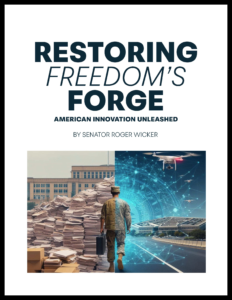
Delivering a twenty-first-century Department of Defense requires modernizing how the Pentagon equips the warfighter while strengthening the industrial base that underpins American military power. This year’s NDAA advances that mission by accelerating acquisition reform, expanding access to commercial innovation, and investing in resilient domestic production across critical sectors. With Honor was proud to see key priorities from the FoRGED Act—introduced by Senate Armed Services Committee Chairman and With Honor Action ally Senator Roger Wicker—reflected in the legislation, including:
The establishment of portfolio acquisition executives to oversee groups of related defense programs, replacing fragmented, program-by-program decision-making with clearer authority and accountability. This policy shift is designed to expedite delivery, enhance coordination between budgets and requirements, and enable the DoD to adapt more quickly to evolving national security needs.
Advancements toward a commercial-first procurement policy that directs the DoD to prioritize proven, off-the-shelf technologies before pursuing bespoke military systems. This approach aims to reduce costs, shorten timelines, and better leverage America’s commercial innovation base to meet urgent defense needs.
Standing With Our Democratic Allies & Partners
This year’s NDAA reinforces America’s leadership by strengthening alliance cooperation, sustaining forward U.S. military presence, and enhancing deterrence across key regions. With Honor Action supported provisions that bolster NATO’s eastern flank through the Baltic Security Initiative, deepen Indo-Pacific partnerships including AUKUS, maintain security assistance for Ukraine, and strengthen congressional oversight of U.S. force posture in Europe and the Korean Peninsula. Together with new safeguards on outbound investment to the People’s Republic of China, these measures underscore a sustained commitment to collective defense, allied unity, and a stable, rules-based international order. Specifically, the NDAA includes:
$400 million to support Ukraine’s self-defense through the Ukraine Security Assistance Initiative and an expansion of U.S. efforts to identify and return the estimated over 19,000 Ukrainian children abducted during Russia’s invasion.
Maintaining U.S. troop levels in Europe and NATO, while codifying protections for key alliance leadership roles, strengthening deterrence against continued Russian aggression, and reinforcing NATO’s collective defense posture amid the ongoing war in Ukraine and broader strategic uncertainty.
Maintaining U.S. troop levels in Korea, which reaffirms the U.S.–ROK Mutual Defense Treaty, strengthens deterrence against North Korean provocations, and supports stability amid rising regional tensions, while reinforcing broader U.S. security commitments across the Indo-Pacific.
Supporting the Warfighter and Our Military Families
This year’s NDAA strengthens warfighter readiness by addressing long-term health risks, improving force protection, and expanding support for military families. With Honor was proud to help advance the ROTOR Act (Sec. 736), led by Reps. Rich McCormick and Chris Deluzio, which extends cancer research to rotary-wing aviators and aviation support personnel to uncover previously unstudied occupational risks. The legislation also establishes blast safety officers to reduce traumatic brain injuries (Sec. 508), enhances compensation and allowances, and expands access to childcare and family support.
Expanding National Civic Youth Programs
This year’s NDAA enhances national readiness by expanding opportunities for young Americans to serve and develop their future leadership skills. With Honor supported full funding for JROTC and the authorization of 200 new units nationwide (Sec. 542), expanding access to leadership, civics, and STEM education. The legislation also boosts funding for the U.S. Naval Sea Cadet Corps, National Guard STARBASE, and Civil Air Patrol (Sec. 4301), providing hands-on training in critical fields, while establishing automatic Selective Service registration to reduce the bureaucratic burden on registrants. Together, these measures invest in the next generation of civic and military leaders, reinforcing the foundations of the all-volunteer force.
With Honor Action commends Congress for passing the NDAA for the 65th consecutive year. In February, the organization submitted its FY26 priorities to Congress and worked alongside bipartisan members of the For Country Caucus throughout the legislative process. 70 of those shared priorities were enacted into law as part of this year’s NDAA. A full list of enacted provisions supported by With Honor Action is available [here].
While this year’s NDAA has just been finalized, With Honor is already identifying the priorities we will continue to advocate for in Fiscal Year 2027. We will work to advance the right to repair, strengthening the operational readiness of service members by ensuring they have the necessary tools, information, and authority to repair equipment in the field without incurring high contractor maintenance fees. Our advocacy will also prioritize the need to expand veteran home ownership, including the requirement of side-by-side comparisons of conventional, FHA, and VA loan options, so that eligible borrowers clearly understand and can fully access the benefits they have earned.
###
About With Honor Action With Honor Action works alongside bipartisan Members of Congress—particularly the veterans of the For Country Caucus—to advance principled, bipartisan solutions that strengthen America’s security and democratic institutions. By supporting leaders who pledge to serve with integrity, civility, and courage, With Honor Action helps counter polarization and drive results for the American people. With Honor Action is a 501(c)(4) organization and serves as the policy and social-welfare arm of With Honor. With Honor has an affiliated, federally registered super PAC, With Honor Fund III. Learn more at withhonor.org.
At a time when Congress is struggling to work across party lines, With Honor and the For Country Caucus remain among the few places where principled veteran leaders are delivering real results for the American people. This year, With Honor Action helped pass 71 bipartisan laws, including the ACES Act, which passed as a standalone, and the five priority areas outlined below that advance American biotechnology leadership, modernize the Department of Defense’s acquisition system, boost youth service programs, prioritize warfighter health, and expand support for our democratic allies and partners in the National Defense Authorization Act for Fiscal Year 2026.
Protecting and Advancing American Biotechnology Leadership
Sec. 241, Support for R&D of Bioindustrial Manufacturing Processes: Authorizes research funds to design and construct bioindustrial manufacturing facilities, thereby securing our domestic supply chains.
Sec. 242, Biotechnology Management Office: Establishes a Biotechnology Management Office, led by a senior Department of Defense official, to foster the development, acquisition, and sustainment of biotechnology capabilities for the Department.
Sec. 243, Bioindustrial Commercialization Program: Authorizes the Department of Defense to establish a program to incentivize the private sector’s expansion of infrastructural capacity across the U.S. for the manufacture of bioindustrial products at a commercial scale that are critical to defense and national security needs.
Sec. 244, Biotechnology Supply Chain Resiliency Program: Authorizes the Department of Defense to establish a program that serves as an accelerator for biotechnology and advanced biomanufacturing solutions, creating domestic supply chains for defense materials.
Sec. 245, Biological Data for Artificial Intelligence: Directs the Secretary of Defense, in consultation with the Secretaries of the military departments and heads of research laboratories, to develop and implement requirements for biological data to be collected and stored in a manner that facilitates their use in artificial intelligence.
Sec. 246, Department of Defense Biotechnology Strategy: This provision directs the Secretary of Defense to submit a strategy on the national security implications of emerging biotechnologies, including updated plans and policies for biotechnology research and coordination between NATO countries and standardized training for all members of the Armed Forces, civilian employees, and contractors whose duties involve biotechnology.
Sec. 247, Ethical and Responsible Development and Deployment of Biotechnology: Directs the Secretary of Defense to issue policies and guidelines on the ethical and responsible development and deployment of biotechnology within the Department of Defense.
Sec. 248, Establishing Biobased Product Merit Guidance: Requires the Under Secretary of Defense for Research and Engineering to make publicly available guidance on how private entities can effectively demonstrate that a biobased product meets Department of Defense requirements.
Sec. 851, Prohibition on Contracting with Certain Biotechnology Providers: Prohibits executive agencies from procuring or obtaining any biotechnology equipment or service produced or provided by a biotechnology company of concern.
Sec. 6611, Senior Officials for Biotechnology: Designates a senior official responsible for activities related to biotechnology at different elements of the Intelligence Community, including the Office of the Director of National Intelligence, the Central Intelligence Agency, the National Security Agency, the Defense Intelligence Agency, the Federal Bureau of Investigation, and the Department of Energy Office of Intelligence and Counterintelligence.
Sec. 6612, Plan on Enhanced Intelligence Sharing on Biotechnological Threats: Directs the Director of National Intelligence to establish a policy for streamlining the declassification or downgrading and sharing of intelligence information relating to biotechnological developments and threats with allies and partners, private sector partners, and across the federal government.
Sec. 6613, Enhancing Biotechnology Talent within the Intelligence Community: Directs the Director of National Intelligence to develop and implement a plan to ensure existing and future funding and resources to the Intelligence Community provide for sufficient personnel and outside expertise, including private sector experts, to identify and respond to biotechnology threats.
Sec. 6614, Enhanced Intelligence Community Support to Secure U.S. Biological Data: Directs the Director of National Intelligence to provide support to and consult with the FBI and CFIUS when reviewing attempts by the People’s Republic of China to leverage and acquire biological and genomic data in and outside of the U.S., enhancing the security of U.S. datasets.
Sec. 6615, Ensuring Intelligence Community Procurement of Domestic Synthetic DNA and RNA: Directs the Director of National Intelligence to establish a policy to ensure that elements of the Intelligence Community that procure synthetic DNA or RNA from domestic sources do not contract with Chinese biotechnology suppliers or supply chain intermediaries.
Sec. 6616, Strategy for Addressing Intelligence Gaps on Chinese Investment in U.S. Biotechnology: Requires the Director of National Intelligence to develop a strategy for addressing intelligence gaps relating to China’s investment in U.S. biotechnology companies or acquisition of U.S. biotechnology intellectual property.
Sec. 6703, Prohibition on Intelligence Community Contracting with Chinese Military Companies Engaged in Biotechnology: Prohibits the Intelligence Community from contracting with Chinese military companies engaged in biotechnology research, development, or manufacturing.
Delivering a 21st Century Department of Defense and Industrial Base
Sec. 124, Contract Authority for Ford-Class Aircraft Carrier Program: Directs the Secretary of Defense to enter into contracts for the procurement of two Ford-class aircraft carriers.
Sec. 125, Contract Authority for Columbia-Class-Submarine Program: Directs the Secretary of Defense to enter into contracts for the procurement of five Columbia-class submarines.
Sec. 127, Procurement Authorities for Medium Landing Ships: Directs the Secretary of Defense to enter into contracts for the procurement of 15 Medium Landing Ships.
Sec. 319, Establishment of Advanced Nuclear Transition Working Group: Directs the Secretary of Defense to establish an interagency working group to develop and implement a strategy for advancing the use of nuclear energy technologies, like Small Modular Reactors (SMRs), and recommendations for three pilot programs to enhance the energy resiliency of our military installations.
Sec. 844, Prohibition of Procurement of Molybdenum, Gallium, or Germanium from Non-Allied Foreign Nations and Authorizations for Production of Covered Materials: Prohibits the procurement of Molybdenum, Gallium, or Germanium sourced from a non-allied foreign nation, securing the supply chain for minerals critical to our defense materials.
Sec. 845, Modifications to Certain Procurements from Certain Chinese Entities: Prohibits the Secretary of Defense from expending loan or grant funds to procure or obtain goods and services produced or developed by an entity identified in the list published in the Federal Register of Chinese military companies operating in the United States, and extends this prohibition to include biotechnology products, ensuring the security of our supply chains and defense materials.
Sec. 1019, Strategy for Navy Investment In and Support for the Maritime Industrial Base: Requires the Secretary of the Navy to develop and implement a strategy for direct investment in the maritime industrial base to address cost and schedule challenges for shipbuilding programs.
Sec. 102, Pilot Program on Use of Automated Shipbuilding Technologies and Capabilities: Directs the Secretary of the Navy to establish a pilot program on the use of automated technologies and capabilities in naval shipbuilding to reduce overall construction times and alleviate workforce constraints.
Sec. 1081, Extension of the National Commission on the Future of the Navy: The FY23 NDAA established the commission to undertake a comprehensive study of the structure, size, and force structure of the Navy. Due to staffing delays, the commission has not yet completed this study. This provision extends the commission’s deadline by an additional year and allows access to special access programs, ensuring the comprehensive and detailed study initially requested.
Sec. 1088, Pilot Program on Enhanced Use of Advanced Sensor Networks to Improve Air Force Counter-Unmanned Aircraft System (C-UAS) Capabilities for Base Defense: In February 2025, the North American Aerospace Defense Command and Northern Command chief testified before Congress that drones and other UAS are used to detect and surveil over 100 different military installations. This provision directs the Secretary of the Air Force, in coordination with the Director of the Joint Interagency Task Force 401 and in consultation with the Administrator of the Federal Aviation Administration, to conduct a pilot program to enhance base defense against small unmanned aircraft systems, ensuring that sensitive sites and capabilities are not compromised.
Sec. 1101, Prohibition on the Use of Funds from Carrying Out a Hiring Freeze, Reduction in Force, or Hiring Delay Without Cause at a Public Shipyard: This provision was championed by For Country Caucus members Reps. Maggie Goodlander and Jen Kiggans, and Rep. Chris Pappas, who introduced the standalone “Protecting Public Shipyards Act”, which served as the base text for this section. This prohibits the use of authorized funds to implement a hiring freeze, reduction-in-force, or hiring delay at the nation’s four public shipyards, thereby decreasing the effectiveness of our defense industrial base.
Sec. 1544, Integration of Reserve Component Into Cyber Mission Force: Requires the Assistant Secretary of Defense for Cyber Policy and the Commander, United States Cyber Command, to produce and submit a report on the integration of reserve components into the cyber mission force to meet the needs of the force and the changing threat landscape.
Sec. 1801, Establishment of the Role of Portfolio Acquisition Executive: Creates the position of Portfolio Acquisition Executive as the senior acquisition official to lead a portfolio of capabilities, with authority for plans, budgets, and the execution of programs assigned to the portfolio, streamlining the acquisition process and reducing burdensome red tape.
Sec. 1822, Modifications to Commercial Products and Commercial Services: Establishes a formal process for determining the non-availability of commercial products or services and requires the contracting officer and program manager to submit written memoranda before using non-commercial solicitation procedures, ensuring the Department prioritizes the most efficient and cost-effective products and services available.
Standing With Our Democratic Allies & Partners
Sec. 1085, AUKUS Improvement Act: Improves the Australia, United Kingdom, and United States (AUKUS) defense trade partnership by exempting Australia and the United Kingdom from certain arms transfers reporting requirements and notifications, streamlining the transfer process, and ensuring unfettered collaboration between allies.
Sec. 1243, Extension and Modification of the Ukraine Security Assistance Initiative (USAI): The USAI, created by Congress in 2015, is a funding source for the Department of Defense’s security assistance to Ukraine and its security forces, including intelligence support, training, equipment, and logistics support. This provision extends the initiative for an additional three years, enabling continued American support for Ukraine’s defense against the Russian invasion and allowing strategic long-term planning.
Sec. 1247, Baltic Security Initiative: Directs the Secretary of Defense, in coordination with the Commander of the United States European Command, to implement an initiative to enhance security cooperation with the military forces of the Baltic countries and deter further Russian aggression. This provision was led by Reps. Don Bacon and Salud Carbajal, who Co-Chair the House Baltic Caucus.
Sec. 1249, Oversight of United States Military Posture in Europe: Prohibits the Secretary of Defense from using authorized funds to reduce the number of members of the Armed Forces deployed to the area of responsibility of the United States European Command below 76,000 for longer than 45 days, ensuring continued operational readiness in the European theater.
Sec. 1249, Oversight of United States Military Posture in Europe: Prohibits the Secretary of Defense from relinquishing the role of the Commander of the United States European Command as the NATO Supreme Allied Commander Europe without submitting a certification to Congress that the proposed changes are in the national security interest of the United States.
Sec. 1266, Joint Program with Taiwan to Enable Fielding of Uncrewed Systems and Counter-Uncrewed Systems: Requires the Secretary of Defense to engage with appropriate Taiwanese officials in a joint program for the purpose to co-develop and co-produce uncrewed and counter-uncrewed systems, leveraging the American and Taiwanese defense bases to work toward combating mutual threats.
Sec. 1268, Oversight of United States Military Posture on the Korean Peninsula: Prohibits the Secretary of Defense from using authorized funds to reduce the number of Armed Forces stationed in or deployed to the Republic of Korea below 28,000, or transition wartime operational control of United States-Republic of Korea Combined Forces Command to the Republic of Korea in deviation from the bilaterally agreed upon plan, ensuring operational readiness on the Korean Peninsula and Indo-Pacific.
Sec. 4301: Authorizes $175 million for the Baltic Security Initiative, which will be used to enhance the interoperability and defense capabilities of Estonia, Latvia, and Lithuania and bolster NATO’s Eastern Flank.
Sec. 4301: Authorizes $400 million for the USAI, which will be used to provide continued support to Ukraine’s Armed Forces and security services.
Sec. 8362, Sense of Congress on Russia’s Illegal Abduction of Ukrainian Children: Georgetown University’s Collaborative on Global Children’s Issues found that Russia is turning abducted Ukrainian children into soldiers, forcibly deporting them from occupied territories, and conscripting them into a “Youth Army”. This provision recognizes the abduction of at least 20,000 Ukrainian children by the Russian Federation and its military forces since the full-scale invasion of Ukraine in 2022, and calls on the Russian Federation to work with the international community to ensure the return of all abducted children.
Sec. 8363, Supporting Identification and Recovery of Abducted Ukrainian Children: Codifies the Abducted Ukrainian Children Recovery and Accountability Act into law, authorizing the United States Departments of Justice and State to provide law enforcement and intelligence technical assistance, training, capacity building, and advisory support to the Government of Ukraine in their efforts to identify and recover abducted Ukrainian children.
Title LXXXV, Comprehensive Outbound Investment National Security Act of 2025: This provision was a priority of the House Select Committee on Strategic Competition Between the United States and the Chinese Communist Party and was introduced as a standalone bill in the 118th Congress. This provision limits the use of dual-use strategic technologies and funds to the People’s Republic of China, maintaining America’s technological edge and preventing American dollars from being invested in sectors critical to the Chinese military and economy.
Supporting the Warfighter and Our Military Families
Aviator Cancer Examination Study (ACES) Act (H.R. 530 / S. 201): A study released in 2023 by the Department of Defense found that military pilots and aircrew had a roughly 24% higher chance of being diagnosed with cancer than the general U.S. population, with elevated incidences of cancers such as prostate, testicular, non-Hodgkin lymphoma, and melanoma. This bill, led by For Country Caucus members Rep. August Pluger, Rep. Jimmy Panetta, and Senate ally Sen. Mark Kelly, directs the Department of Veterans Affairs to conduct a comprehensive study of cancer incidence and mortality among aviators and aircrew who served in the Navy, Air Force, and Marine Corps. The findings it produces will guide improvements in prevention, early detection, and care, laying the groundwork for stronger protections for military aviators and aircrew.
Sec. 311, Inclusion of Information About PFAS Investigations and Remediation in Annual Report on Defense Environmental Programs: In 2025, the Department of Defense identified 723 active military installations, facilities, and defense sites that required assessments for PFAS contamination and remediation. This provision requires the Secretary of Defense to conduct an annual cost-to-complete analysis of the most significant contributors to the Department’s costs incurred in investigating and remediating PFAS.
Sec. 324, Authority to Use Certain Technologies to Destroy or Dispose of Perfluoroalkyl or Polyfluoroalkyl (PFAS) Substances: Provides the Secretary of Defense the authority to use technologies for the destruction of PFAS across the 723 active military installations, facilities, and defense sites where it has been identified.
Sec. 508, Establishment of a Blast Safety Officer Positions: Soldiers World War I called it “shell shock”, but today we call it blast overpressure, and it is detrimental to brain health and cognitive performance. This provision directs the Secretary of Defense to establish blast safety officer positions in the Army, Navy, Marine Corps, Air Force, and Space Force, thereby mitigating incidents of blast overpressure and reducing health risks to our service members.
Sec. 736, Study on Prevalence and Mortality of Cancer Among Military Rotary-Wing Pilots and Aviation Support Personnel: With Honor Action was proud to support the Aviator Cancer Examination Study (ACES) Act, which was a pivotal step in uncovering and confronting the hidden cancer risks faced by military aviators and aircrew. This provision, spearheaded by For Country Caucus member Rep. Richard McCormick, who introduced the standalone “Rotary-wing Operator Toxic Occupational Research (ROTOR) Act” which provided the basis for this section, directs the Secretary of Defense to conduct a similar study among rotary-wing aviators and aircrews to determine whether there is an increased prevalence or rate of death caused by cancer compared to similar individuals in the general public, and if so, to identify carcinogenic toxins or other hazardous materials associated with the operation military rotary-wing aircraft.
Sec. 581, Notification of Suspected Child Abuse that Occurs at a Military Child Development Center: This provision was led by For Country Caucus members, Reps. Don Davis, Don Bacon, and Jen Kiggans, as well as Rep. Jill Tokuda, who introduced the standalone “Military Child and Youth Program Abuse and Neglect Notification Act,” which serves as the base for this section. This requires covered child and youth programs operating on military installations or other Department of Defense sites to notify parents and guardians within 24 hours of alleged or suspected abuse or neglect of a child, prioritizing the safety and security of the children entrusted into the care of the Department.
Sec. 601, Reform to Basic Pay: Provides a 3.8% pay raise to all service members.
Sec. 611, One-Year Extension of Certain Expiring Bonus and Special Pay Authorities: Extends specific bonus and special pay authorities relating to Reserve officers; health care professionals; nuclear officers; consolidated special, incentive, and bonus authorities under Title 37 USC; and temporary increases in the rates of basic allowances for housing, helping service members to keep up with the rising cost of goods and housing.
Sec. 621, Modifications to Calculations of Basic Allowance for Subsistence for Enlisted Members: Studies by the Military Family Advisory Network found that one in five military and veteran families experience food insecurity. This provision directs the Secretary of Defense to base the Basic Allowance for Subsistence for enlisted members on the Department of Agriculture’s liberal food plan, clarify the calculation of the allowance under Essential Station Messing, and require the Secretary to submit an annual report through 2028 addressing the sources and use of funds to meet the nutritional needs of our military community.
Sec. 622, Family Separation Allowances: Increases the monthly Family Separation Allowance for deployed service members separated from their dependents to $300. This increase eases the burden of travel and extra expenses that result from separation from their families.
Sec. 624, Improvements to Basic Allowance for Housing: A one-size-fits-all approach to housing won’t work when rents are heavily dependent on geographic areas and other independent factors. This provision requires the Department to evaluate alternative methods for calculating the basic allowance for housing, including piloting an artificial-intelligence-generated rate model in selected housing areas. It also strengthens transparency requirements for how housing allowance rates are calculated and expands the study to evaluate current rate adequacy, while developing improved, data-driven methods that incorporate machine learning and artificial intelligence. This provides more tools to expand access to affordable housing for service members and their families.
Sec. 631, Improved Parental Leave for Members of the Armed Forces: This provision allows more flexibility for parents in the Armed Forces to spend time with their babies or young children, by requiring the Secretary of Defense to exempt service members from performance reviews during parental leave, and expanding the timeframe to take parental leave to two years.
Sec. 651, Use of Commissary Stores, Civilian Employees of Military Sealift Command: Permits civilian employees of the Military Sealift Command, which operates 125 civilian-crewed ships that replenish Navy ships, conduct specialized missions, and preposition strategic combat cargo at sea, to use commissary stores and Morale, Welfare, and Recreational retail facilities, ensuring access to savings for non-unifomred support personnel.
Sec. 652, Defense Commissary System and Exchange System: To prevent higher grocery prices for our service members and their families, this provision prohibits privatizing military commissaries, which would reduce access to affordable groceries and interfere with the mandated 23.7% savings required by law.
Sec. 737, Study on Psychological Effects of and Mental Health Effects of Combat Remotely Piloted Aircraft Operations: The Journal of Mental Health and Clinical Psychology found that the remote nature of drone warfare was creating novel mental health issues among service members. This provision requires the Secretary of Defense to conduct a study on the psychological effects of remotely piloted aircraft combat operations on members of the Armed Forces.
Sec. 911, Removal of Members of the Joint Chiefs of Staff and Combatant Commanders: After several high ranking military officials were removed or transfered from their commands earlier this year, this provision requires the president to submit a notice to Congress within five days of the removal or transfer of a member of the Joint Chiefs of Staff or combatant commander, and an accompanying rationale for the reason for removal or transfer, to prevent the politicization of our Armced Forces.
Sec. 1506, Occupational Resiliency of the Cyber Mission Force: The sensitive nature of operations can prevent service members from receiving the help they need from mental health professionals. This provision ensures that health providers have the requisite security clearances to treat members of the Cyber Mission Force.
Sec. 4201: Authorizes $3.5 million for Blast Overpressure reduction technologies, which will measure and mitigate the damaging pressure waves caused by explosions, such as those from artillery fire, and help produce risk reduction strategies that will preserve the health of our warfighters.
Sec. 4601: Authorizes over $491 million to design and build new childcare centers, alleviating the burden of costly childcare for military families on fixed incomes or without access to other childcare options.
Expanding National Civic Youth Programs
Junior Reserve Officers’ Training Corps (JROTC)
JROTC is a federally funded program, created in 1916, that helps train 490,000 high school students in over 3,500 units across all 50 states and on overseas military installations. Taught over the course of high school, the classes focus on topics like leadership, ethics, civics, history, health and wellness, and, more recently, science, technology, engineering, and mathematics (STEM). Extracurricular activities offered through the program include color guard and drill teams, marksmanship, seamanship, and navigation.
Sec. 542, Number of Junior Reserve Officers’ Training Corps (JROTC) units: Raises the maximum number of units across the country by 200, from 4,000 to 4,200.
Sec. 4301: Authorizes full funding for the Army, Navy, and Air Force JROTCs, totaling $353.9 million, $138 million above the President’s Budget Request (PBR).
2. United States Naval Sea Cadet Corps
The Navy League established the Sea Cadet Corps in 1962, providing a training ground for young men and women aged 10 to 18to develop the values of discipline, accountability, and teamwork. Today, there are nearly 6,000 Sea Cadets enrolled in over 380 units across the United States, Puerto Rico, Guam, and the Mariana Islands, attending advanced training camps in cybersecurity, maritime interdiction, medical training, search and rescue operations, and leadership development.
Sec. 4301: Authorizes a $4.3 million increase in funding above the President’s Budget Request (PBR), which did not include a line item request.
3. National Guard STARBASE Program
The Department of Defense initiated STARBASE in 1991, and in 1993, Congress appropriated funds to lay the foundation for the program as it exists today, expanding its reach to more states. This “hands-on, minds-on” program focuses on fifth-grade students, creating a space for them to participate in challenging STEM activities and explore their applications in the professional and “real” world. STARBASE operates in 86 locations worldwide, reaching over 75,000 students annually. For Country Caucus member Rep. Salud Carbajal, who is the Co-Chair of the Congressional STARBASE Caucus, has worked extensively to expand the program’s reach to more students.
Sec. 4301: Authorizes a $50 million increase in funding above the PBR, which did not include a line item request.
4. Civil Air Patrol (CAP)
The CAP was established in 1942 to transform Cadets, aged 12-20, and interested in aviation, space, or the military, into American and aerospace leaders. Cadets gain real-world experience in leadership, aerospace, fitness, and exposure to both commercial and military aviation. There are over 27,000 cadets in almost 1,000 hometown squadrons nationwide.
Sec. 4301: Authorizes $32.5 million, a $29 million increase above the PBR, for CAP operations and maintenance.
Sec. 4301: Authorizes $17.8 million, a $14.7 million increase above the PBR, for CAP aircraft.
5. Sec. 531, Recruiter Access to Secondary Schools: This provision was championed by For Country Caucus member Rep. Jen Kiggans and Senate Ally Sen. Joni Ernst, whose standalone “Service Enlistment and Recruitment of Valuable Engagement Act (SERVE) Act” included the base text for this section. It will allow military recruiters access to secondary schools, on par with access given to prospective employers or institutions of higher education, to support recruitment efforts and ensure we have a viable, all-volunteer force.
6. Sec. 533, Medical Accession Standards for Members of the Armed Forces: This provision was also championed by For Country Caucus member Rep. Jen Kiggans, whose standalone “Qualified to Serve Act” was incorporated into the base text of this section. This directs the Secretary of Defense to prescribe uniform medical accession standards for the appointment, enlistment, or induction of individuals into the armed forces, ensuring that qualified young Americans are not unfairly barred from service because of outdated or resolved medical diagnoses from their childhood.
7. Sec. 535, Selective Service System – Automatic Registration: This provision was spearheaded by For Country Caucus members Rep. Jack Bergman and Chrissy Houlahan, whose amendment secured its inclusion into the bill. This amends the Selective Service Act to automatically register every male citizen of the United States between the ages of 18 and 26, securing our ability to fairly conscript troops when dire circumstances require it.
Congress just did something rare: It was consistent. For the 65th year in a row, Congress passed the National Defense Authorization Act (known as the “NDAA”) this week on a broad, bipartisan basis.
The first NDAA that passed in 1961 was half a page. This year’s NDAA is a whopping 3,086 pages, a big bill that sets policy for the entire Department of Defense, authorizing and allocating $900.6 billion, including a 3.8 percent pay raise for service members. Congress also included authorizations for the Department of State, the Coast Guard, intelligence agencies, and parts of the Department of Energy in this year’s bill.
It’s also an opportunity for organizations like With Honor Action to weigh in on a consistent, bipartisan, bicameral process on policies that affect all Americans and our place in the world. So while you’re reading the entire bill during this holiday season, here are five takeaways from our work on this year’s NDAA.
When With Honor Action was founded eight years ago, we committed to helping elect principled veterans to Congress to bridge the partisan divide and deliver results for the American people. By working on a bipartisan basis through the For Country Caucus, a group of 37 veterans in the House, and our 11-member Senate alliance, these members have prioritized passing common-sense, consequential legislation.
With Honor Action’s priorities this year revolve around five distinct policy areas:
Protecting and advancing American biotechnology leadership
Modernizing the Department of Defense and the defense industrial base
Standing with our democratic allies and partners
Supporting the warfighter and military families
Expanding national civic youth programs
Protecting and Advancing American Biotechnology Leadership
In 2021, With Honor Action helped lead the establishment of the National Security Commission on Emerging Biotechnology (NSCEB), working alongside For Country Caucus members Rep. Seth Moulton and then-Rep. Mike Gallagher. Created by Congress, the Commission is charged with assessing how advances in emerging biotechnology will shape U.S. national security and the future of the Department of Defense.
Chaired by Senator Todd Young, a key With Honor Action Senate ally, the Commission released its Final Report earlier this year at a reception hosted by With Honor, proposing 49 actionable legislative recommendations and making it clear that sustained U.S. leadership in biotechnology will require intentional investment. Founding For Country Caucus Vice Chair Rep. Chrissy Houlahan additionally co-founded the House BIOTech Caucus in collaboration with the NSCEB to advance biotechnology policy.
Building upon our previous strategies with commissions for AI and cybersecurity, With Honor Action was proud to see the enactment of 17 provisions in the NDAA that protect and advance American global leadership in biotechnology. These provisions include the BIOSECURE Act (Sec. 851), a long-term priority of With Honor’s that has encountered significant industry pushback and is a shared priority with the Select Committee on the CCP, as well as the elevation of biotechnology as a priority across the entire Department of Defense (Sec. 242).
Watch Senator Young, Rep. Houlahan, and BIO President and CEO John F. Crowley’s panel at our Strength in Democracy Forum:
Delivering a 21st Century Department of Defense and Industrial Base
Delivering a twenty-first-century Department of Defense requires modernizing how the Pentagon equips the warfighter and strengthening the industrial base that underpins American military power. This year’s NDAA advances that mission by accelerating acquisition reform, expanding access to commercial innovation, and investing in resilient domestic production across critical sectors.
With Honor was proud to see key priorities from the FoRGED Act, introduced by Senate Armed Services Committee Chairman and With Honor Action ally Senator Roger Wicker, reflected in the legislation, including the establishment of Portfolio Acquisition Executives (Sec. 1801) and reforms that move the Department of Defense toward a commercial-first acquisition system (Sec. 1822). Together with provisions to secure critical mineral supply chains (Sec. 844), modernize shipbuilding (Sec. 102), and protect the defense maritime workforce (Sec. 1101), these provisions lay the foundation for a more agile, innovative, and resilient defense ecosystem built to meet the challenges of the decades ahead.
Standing With Our Democratic Allies & Partners
With Honor Action’s work in this year’s NDAA reaffirms America’s commitment to stand with our democratic allies and partners as they confront security challenges across every region. The legislation strengthens alliance cooperation, sustains forward U.S. presence in critical theaters, and reinforces deterrence through continued congressional oversight of U.S. force posture in Europe (Sec. 1249) and the Korean Peninsula (Sec. 1268).
The NDAA strengthens support for NATO’s eastern flank by codifying the Baltic Security Initiative (Sec. 1247), a bipartisan priority led by For Country Caucus members Reps. Don Bacon and Salud Carbajal, in their roles as Co-Chairs of the House Baltic Caucus. It also deepens security partnerships across the Indo-Pacific through initiatives such as AUKUS (Sec. 1085) and sustains critical security assistance for Ukraine (Sec. 1243). Complementing these efforts, the legislation advances oversight of outbound investment into the People’s Republic of China (Title LXXXV), a significant priority of the House Select Committee on Strategic Competition with the CCP, to protect America’s technological edge and safeguard national security. Together, these provisions reflect a durable commitment to alliance leadership, collective defense, and a stable, rules-based international order.
Watch Senator Dan Sullivan, Australian Ambassador Kevin Rudd, and London Defence Conference Chairman Lord Robert Salisbury’s panel at our Strength in Democracy Forum:
Supporting the Warfighter and Our Military Families
Supporting the warfighter requires sustained attention to the long-term health, readiness, and resilience of those who serve, as well as the families who support them. This year’s NDAA advances that mission by expanding efforts to identify and address service-related health risks, improve force protection, and strengthen support systems for military families. With Honor was proud to help advance the ROTOR Act, led by For Country Caucus members Rep. Rich McCormick and Vice Chair Rep. Chris Deluzio, by extending critical cancer research to rotary-wing aviators and aviation support personnel (Sec. 736). By directing the Department of Defense to study cancer prevalence and mortality among these service members, the NDAA takes a crucial step toward uncovering hidden occupational risks and enhancing long-term care for the aviation community.
This year’s NDAA also establishes blast safety officers to reduce blast overpressure and traumatic brain injuries (Sec. 508), enhances compensation and allowances (Secs. 601, 621, 622, & 624), and expands access to childcare and family support services (Sec. 631). Together, these provisions enhance readiness by ensuring that the warfighter and their families have the necessary protection, support, and care to serve effectively.
Expanding National Civic Youth Programs
Expanding opportunities for young Americans to serve is a core With Honor priority and a long-term investment in national readiness and civic leadership. This year’s NDAA delivers tangible support for proven youth programs by fully funding JROTC and authorizing the expansion of up to 200 additional units nationwide (Sec. 542), ensuring more students have access to leadership, civics, and STEM education.
The legislation also increases funding for the U.S. Naval Sea Cadet Corps, the National Guard STARBASE program, and the Civil Air Patrol (Sec. 4301)—programs that provide hands-on training in fields ranging from cybersecurity and aviation to maritime operations and aerospace leadership. Complementing these investments, the NDAA establishes automatic Selective Service registration, strengthening the nation’s ability to meet future manpower requirements and reinforcing the foundations of the all-volunteer force.
Watch Senator Jack Reed’s remarks at With Honor Action’s event marking the 5th anniversary of the National Commission on Military, National, and Public Service’s release of its Final Report:
With Honor Action’s Priorities in the National Defense Authorization Act for Fiscal Year 2026
Protecting and Advancing American Biotechnology Leadership
Sec. 241, Support for R&D of Bioindustrial Manufacturing Processes: Authorizes research funds to design and construct bioindustrial manufacturing facilities, thereby securing our domestic supply chains.
Sec. 242, Biotechnology Management Office: Establishes a Biotechnology Management Office, led by a senior Department of Defense official, to foster the development, acquisition, and sustainment of biotechnology capabilities for the Department.
Sec. 243, Bioindustrial Commercialization Program: Authorizes the Department of Defense to establish a program to incentivize the private sector’s expansion of infrastructural capacity across the U.S. for the manufacture of bioindustrial products at a commercial scale that are critical to defense and national security needs.
Sec. 244, Biotechnology Supply Chain Resiliency Program: Authorizes the Department of Defense to establish a program that serves as an accelerator for biotechnology and advanced biomanufacturing solutions, creating domestic supply chains for defense materials.
Sec. 245, Biological Data for Artificial Intelligence: Directs the Secretary of Defense, in consultation with the Secretaries of the military departments and heads of research laboratories, to develop and implement requirements for biological data to be collected and stored in a manner that facilitates their use in artificial intelligence.
Sec. 246, Department of Defense Biotechnology Strategy: This provision directs the Secretary of Defense to submit a strategy on the national security implications of emerging biotechnologies, including updated plans and policies for biotechnology research and coordination between NATO countries and standardized training for all members of the Armed Forces, civilian employees, and contractors whose duties involve biotechnology.
Sec. 247, Ethical and Responsible Development and Deployment of Biotechnology: Directs the Secretary of Defense to issue policies and guidelines on the ethical and responsible development and deployment of biotechnology within the Department of Defense.
Sec. 248, Establishing Biobased Product Merit Guidance: Requires the Under Secretary of Defense for Research and Engineering to make publicly available guidance on how private entities can effectively demonstrate that a biobased product meets Department of Defense requirements.
Sec. 851, Prohibition on Contracting with Certain Biotechnology Providers: Prohibits executive agencies from procuring or obtaining any biotechnology equipment or service produced or provided by a biotechnology company of concern.
Sec. 6611, Senior Officials for Biotechnology: Designates a senior official responsible for activities related to biotechnology at different elements of the Intelligence Community, including the Office of the Director of National Intelligence, the Central Intelligence Agency, the National Security Agency, the Defense Intelligence Agency, the Federal Bureau of Investigation, and the Department of Energy Office of Intelligence and Counterintelligence.
Sec. 6612, Plan on Enhanced Intelligence Sharing on Biotechnological Threats: Directs the Director of National Intelligence to establish a policy for streamlining the declassification or downgrading and sharing of intelligence information relating to biotechnological developments and threats with allies and partners, private sector partners, and across the federal government.
Sec. 6613, Enhancing Biotechnology Talent within the Intelligence Community: Directs the Director of National Intelligence to develop and implement a plan to ensure existing and future funding and resources to the Intelligence Community provide for sufficient personnel and outside expertise, including private sector experts, to identify and respond to biotechnology threats.
Sec. 6614, Enhanced Intelligence Community Support to Secure U.S. Biological Data: Directs the Director of National Intelligence to provide support to and consult with the FBI and CFIUS when reviewing attempts by the People’s Republic of China to leverage and acquire biological and genomic data in and outside of the U.S., enhancing the security of U.S. datasets.
Sec. 6615, Ensuring Intelligence Community Procurement of Domestic Synthetic DNA and RNA: Directs the Director of National Intelligence to establish a policy to ensure that elements of the Intelligence Community that procure synthetic DNA or RNA from domestic sources do not contract with Chinese biotechnology suppliers or supply chain intermediaries.
Sec. 6616, Strategy for Addressing Intelligence Gaps on Chinese Investment in U.S. Biotechnology: Requires the Director of National Intelligence to develop a strategy for addressing intelligence gaps relating to China’s investment in U.S. biotechnology companies or acquisition of U.S. biotechnology intellectual property.
Sec. 6703, Prohibition on Intelligence Community Contracting with Chinese Military Companies Engaged in Biotechnology: Prohibits the Intelligence Community from contracting with Chinese military companies engaged in biotechnology research, development, or manufacturing.
Delivering a 21st Century Department of Defense and Industrial Base
Sec. 124, Contract Authority for Ford-Class Aircraft Carrier Program: Directs the Secretary of Defense to enter into contracts for the procurement of two Ford-class aircraft carriers.
Sec. 125, Contract Authority for Columbia-Class-Submarine Program: Directs the Secretary of Defense to enter into contracts for the procurement of five Columbia-class submarines.
Sec. 127, Procurement Authorities for Medium Landing Ships: Directs the Secretary of Defense to enter into contracts for the procurement of 15 Medium Landing Ships.
Sec. 319, Establishment of Advanced Nuclear Transition Working Group: Directs the Secretary of Defense to establish an interagency working group to develop and implement a strategy for advancing the use of nuclear energy technologies, like Small Modular Reactors (SMRs), and recommendations for three pilot programs to enhance the energy resiliency of our military installations.
Sec. 844, Prohibition of Procurement of Molybdenum, Gallium, or Germanium from Non-Allied Foreign Nations and Authorizations for Production of Covered Materials: Prohibits the procurement of Molybdenum, Gallium, or Germanium sourced from a non-allied foreign nation, securing the supply chain for minerals critical to our defense materials.
Sec. 845, Modifications to Certain Procurements from Certain Chinese Entities: Prohibits the Secretary of Defense from expending loan or grant funds to procure or obtain goods and services produced or developed by an entity identified in the list published in the Federal Register of Chinese military companies operating in the United States, and extends this prohibition to include biotechnology products, ensuring the security of our supply chains and defense materials.
Sec. 1019, Strategy for Navy Investment In and Support for the Maritime Industrial Base: Requires the Secretary of the Navy to develop and implement a strategy for direct investment in the maritime industrial base to address cost and schedule challenges for shipbuilding programs.
Sec. 102, Pilot Program on Use of Automated Shipbuilding Technologies and Capabilities: Directs the Secretary of the Navy to establish a pilot program on the use of automated technologies and capabilities in naval shipbuilding to reduce overall construction times and alleviate workforce constraints.
Sec. 1081, Extension of the National Commission on the Future of the Navy: The FY23 NDAA established the commission to undertake a comprehensive study of the structure, size, and force structure of the Navy. Due to staffing delays, the commission has not yet completed this study. This provision extends the commission’s deadline by an additional year and allows access to special access programs, ensuring the comprehensive and detailed study initially requested.
Sec. 1088, Pilot Program on Enhanced Use of Advanced Sensor Networks to Improve Air Force Counter-Unmanned Aircraft System (C-UAS) Capabilities for Base Defense: In February 2025, the North American Aerospace Defense Command and Northern Command chief testified before Congress that drones and other UAS are used to detect and surveil over 100 different military installations. This provision directs the Secretary of the Air Force, in coordination with the Director of the Joint Interagency Task Force 401 and in consultation with the Administrator of the Federal Aviation Administration, to conduct a pilot program to enhance base defense against small unmanned aircraft systems, ensuring that sensitive sites and capabilities are not compromised.
Sec. 1101, Prohibition on the Use of Funds from Carrying Out a Hiring Freeze, Reduction in Force, or Hiring Delay Without Cause at a Public Shipyard: This provision was championed by For Country Caucus members Reps. Maggie Goodlander and Jen Kiggans, and Rep. Chris Pappas, who introduced the standalone “Protecting Public Shipyards Act”, which served as the base text for this section. This prohibits the use of authorized funds to implement a hiring freeze, reduction-in-force, or hiring delay at the nation’s four public shipyards, thereby decreasing the effectiveness of our defense industrial base.
Sec. 1544, Integration of Reserve Component Into Cyber Mission Force: Requires the Assistant Secretary of Defense for Cyber Policy and the Commander, United States Cyber Command, to produce and submit a report on the integration of reserve components into the cyber mission force to meet the needs of the force and the changing threat landscape.
Sec. 1801, Establishment of the Role of Portfolio Acquisition Executive: Creates the position of Portfolio Acquisition Executive as the senior acquisition official to lead a portfolio of capabilities, with authority for plans, budgets, and the execution of programs assigned to the portfolio, streamlining the acquisition process and reducing burdensome red tape.
Sec. 1822, Modifications to Commercial Products and Commercial Services: Establishes a formal process for determining the non-availability of commercial products or services and requires the contracting officer and program manager to submit written memoranda before using non-commercial solicitation procedures, ensuring the Department prioritizes the most efficient and cost-effective products and services available.
Standing With Our Democratic Allies & Partners
Sec. 1085, AUKUS Improvement Act: Improves the Australia, United Kingdom, and United States (AUKUS) defense trade partnership by exempting Australia and the United Kingdom from certain arms transfers reporting requirements and notifications, streamlining the transfer process, and ensuring unfettered collaboration between allies.
Sec. 1243, Extension and Modification of the Ukraine Security Assistance Initiative (USAI): The USAI, created by Congress in 2015, is a funding source for the Department of Defense’s security assistance to Ukraine and its security forces, including intelligence support, training, equipment, and logistics support. This provision extends the initiative for an additional three years, enabling continued American support for Ukraine’s defense against the Russian invasion and allowing strategic long-term planning.
Sec. 1247, Baltic Security Initiative: Directs the Secretary of Defense, in coordination with the Commander of the United States European Command, to implement an initiative to enhance security cooperation with the military forces of the Baltic countries and deter further Russian aggression. This provision was led by Reps. Don Bacon and Salud Carbajal, who Co-Chair the House Baltic Caucus.
Sec. 1249, Oversight of United States Military Posture in Europe: Prohibits the Secretary of Defense from using authorized funds to reduce the number of members of the Armed Forces deployed to the area of responsibility of the United States European Command below 76,000 for longer than 45 days, ensuring continued operational readiness in the European theater.
Sec. 1249, Oversight of United States Military Posture in Europe: Prohibits the Secretary of Defense from relinquishing the role of the Commander of the United States European Command as the NATO Supreme Allied Commander Europe without submitting a certification to Congress that the proposed changes are in the national security interest of the United States.
Sec. 1266, Joint Program with Taiwan to Enable Fielding of Uncrewed Systems and Counter-Uncrewed Systems: Requires the Secretary of Defense to engage with appropriate Taiwanese officials in a joint program for the purpose to co-develop and co-produce uncrewed and counter-uncrewed systems, leveraging the American and Taiwanese defense bases to work toward combating mutual threats.
Sec. 1268, Oversight of United States Military Posture on the Korean Peninsula: Prohibits the Secretary of Defense from using authorized funds to reduce the number of Armed Forces stationed in or deployed to the Republic of Korea below 28,000, or transition wartime operational control of United States-Republic of Korea Combined Forces Command to the Republic of Korea in deviation from the bilaterally agreed upon plan, ensuring operational readiness on the Korean Peninsula and Indo-Pacific.
Sec. 4301: Authorizes $175 million for the Baltic Security Initiative, which will be used to enhance the interoperability and defense capabilities of Estonia, Latvia, and Lithuania and bolster NATO’s Eastern Flank.
Sec. 4301: Authorizes $400 million for the USAI, which will be used to provide continued support to Ukraine’s Armed Forces and security services.
Sec. 8362, Sense of Congress on Russia’s Illegal Abduction of Ukrainian Children: Georgetown University’s Collaborative on Global Children’s Issues found that Russia is turning abducted Ukrainian children into soldiers, forcibly deporting them from occupied territories, and conscripting them into a “Youth Army”. This provision recognizes the abduction of at least 20,000 Ukrainian children by the Russian Federation and its military forces since the full-scale invasion of Ukraine in 2022, and calls on the Russian Federation to work with the international community to ensure the return of all abducted children.
Sec. 8363, Supporting Identification and Recovery of Abducted Ukrainian Children: Codifies the Abducted Ukrainian Children Recovery and Accountability Act into law, authorizing the United States Departments of Justice and State to provide law enforcement and intelligence technical assistance, training, capacity building, and advisory support to the Government of Ukraine in their efforts to identify and recover abducted Ukrainian children.
Title LXXXV, Comprehensive Outbound Investment National Security Act of 2025: This provision was a priority of the House Select Committee on Strategic Competition Between the United States and the Chinese Communist Party and was introduced as a standalone bill in the 118th Congress. This provision limits the use of dual-use strategic technologies and funds to the People’s Republic of China, maintaining America’s technological edge and preventing American dollars from being invested in sectors critical to the Chinese military and economy.
Supporting the Warfighter and Our Military Families
Sec. 311, Inclusion of Information About PFAS Investigations and Remediation in Annual Report on Defense Environmental Programs: In 2025, the Department of Defense identified 723 active military installations, facilities, and defense sites that required assessments for PFAS contamination and remediation. This provision requires the Secretary of Defense to conduct an annual cost-to-complete analysis of the most significant contributors to the Department’s costs incurred in investigating and remediating PFAS.
Sec. 324, Authority to Use Certain Technologies to Destroy or Dispose of Perfluoroalkyl or Polyfluoroalkyl (PFAS) Substances: Provides the Secretary of Defense the authority to use technologies for the destruction of PFAS across the 723 active military installations, facilities, and defense sites where it has been identified.
Sec. 508, Establishment of a Blast Safety Officer Positions: Soldiers World War I called it “shell shock”, but today we call it blast overpressure, and it is detrimental to brain health and cognitive performance. This provision directs the Secretary of Defense to establish blast safety officer positions in the Army, Navy, Marine Corps, Air Force, and Space Force, thereby mitigating incidents of blast overpressure and reducing health risks to our service members.
Sec. 736, Study on Prevalence and Mortality of Cancer Among Military Rotary-Wing Pilots and Aviation Support Personnel: With Honor Action was proud to support the Aviator Cancer Examination Study (ACES) Act, which was a pivotal step in uncovering and confronting the hidden cancer risks faced by military aviators and aircrew. This provision, spearheaded by For Country Caucus member Rep. Richard McCormick, who introduced the standalone “Rotary-wing Operator Toxic Occupational Research (ROTOR) Act” which provided the basis for this section, directs the Secretary of Defense to conduct a similar study among rotary-wing aviators and aircrews to determine whether there is an increased prevalence or rate of death caused by cancer compared to similar individuals in the general public, and if so, to identify carcinogenic toxins or other hazardous materials associated with the operation military rotary-wing aircraft.
Sec. 581, Notification of Suspected Child Abuse that Occurs at a Military Child Development Center: This provision was led by For Country Caucus members, Reps. Don Davis, Don Bacon, and Jen Kiggans, as well as Rep. Jill Tokuda, who introduced the standalone “Military Child and Youth Program Abuse and Neglect Notification Act,” which serves as the base for this section. This requires covered child and youth programs operating on military installations or other Department of Defense sites to notify parents and guardians within 24 hours of alleged or suspected abuse or neglect of a child, prioritizing the safety and security of the children entrusted into the care of the Department.
Sec. 601, Reform to Basic Pay: Provides a 3.8% pay raise to all service members.
Sec. 611, One-Year Extension of Certain Expiring Bonus and Special Pay Authorities: Extends specific bonus and special pay authorities relating to Reserve officers; health care professionals; nuclear officers; consolidated special, incentive, and bonus authorities under Title 37 USC; and temporary increases in the rates of basic allowances for housing, helping service members to keep up with the rising cost of goods and housing.
Sec. 621, Modifications to Calculations of Basic Allowance for Subsistence for Enlisted Members: Studies by the Military Family Advisory Network found that one in five military and veteran families experience food insecurity. This provision directs the Secretary of Defense to base the Basic Allowance for Subsistence for enlisted members on the Department of Agriculture’s liberal food plan, clarify the calculation of the allowance under Essential Station Messing, and require the Secretary to submit an annual report through 2028 addressing the sources and use of funds to meet the nutritional needs of our military community.
Sec. 622, Family Separation Allowances: Increases the monthly Family Separation Allowance for deployed service members separated from their dependents to $300. This increase eases the burden of travel and extra expenses that result from separation from their families.
Sec. 624, Improvements to Basic Allowance for Housing: A one-size-fits-all approach to housing won’t work when rents are heavily dependent on geographic areas and other independent factors. This provision requires the Department to evaluate alternative methods for calculating the basic allowance for housing, including piloting an artificial-intelligence-generated rate model in selected housing areas. It also strengthens transparency requirements for how housing allowance rates are calculated and expands the study to evaluate current rate adequacy, while developing improved, data-driven methods that incorporate machine learning and artificial intelligence. This provides more tools to expand access to affordable housing for service members and their families.
Sec. 631, Improved Parental Leave for Members of the Armed Forces: This provision allows more flexibility for parents in the Armed Forces to spend time with their babies or young children, by requiring the Secretary of Defense to exempt service members from performance reviews during parental leave, and expanding the timeframe to take parental leave to two years.
Sec. 651, Use of Commissary Stores, Civilian Employees of Military Sealift Command: Permits civilian employees of the Military Sealift Command, which operates 125 civilian-crewed ships that replenish Navy ships, conduct specialized missions, and preposition strategic combat cargo at sea, to use commissary stores and Morale, Welfare, and Recreational retail facilities, ensuring access to savings for non-unifomred support personnel.
Sec. 652, Defense Commissary System and Exchange System: To prevent higher grocery prices for our service members and their families, this provision prohibits privatizing military commissaries, which would reduce access to affordable groceries and interfere with the mandated 23.7% savings required by law.
Sec. 737, Study on Psychological Effects of and Mental Health Effects of Combat Remotely Piloted Aircraft Operations: The Journal of Mental Health and Clinical Psychology found that the remote nature of drone warfare was creating novel mental health issues among service members. This provision requires the Secretary of Defense to conduct a study on the psychological effects of remotely piloted aircraft combat operations on members of the Armed Forces.
Sec. 911, Removal of Members of the Joint Chiefs of Staff and Combatant Commanders: After several high ranking military officials were removed or transfered from their commands earlier this year, this provision requires the president to submit a notice to Congress within five days of the removal or transfer of a member of the Joint Chiefs of Staff or combatant commander, and an accompanying rationale for the reason for removal or transfer, to prevent the politicization of our Armced Forces.
Sec. 1506, Occupational Resiliency of the Cyber Mission Force: The sensitive nature of operations can prevent service members from receiving the help they need from mental health professionals. This provision ensures that health providers have the requisite security clearances to treat members of the Cyber Mission Force.
Sec. 4201: Authorizes $3.5 million for Blast Overpressure reduction technologies, which will measure and mitigate the damaging pressure waves caused by explosions, such as those from artillery fire, and help produce risk reduction strategies that will preserve the health of our warfighters.
Sec. 4601: Authorizes over $491 million to design and build new childcare centers, alleviating the burden of costly childcare for military families on fixed incomes or without access to other childcare options.
Expanding National Civic Youth Programs
Junior Reserve Officers’ Training Corps (JROTC)
JROTC is a federally funded program, created in 1916, that helps train 490,000 high school students in over 3,500 units across all 50 states and on overseas military installations. Taught over the course of high school, the classes focus on topics like leadership, ethics, civics, history, health and wellness, and, more recently, science, technology, engineering, and mathematics (STEM). Extracurricular activities offered through the program include color guard and drill teams, marksmanship, seamanship, and navigation.
Sec. 542, Number of Junior Reserve Officers’ Training Corps (JROTC) units: Raises the maximum number of units across the country by 200, from 4,000 to 4,200.
Sec. 4301: Authorizes full funding for the Army, Navy, and Air Force JROTCs, totaling $353.9 million, $138 million above the President’s Budget Request (PBR).
2. United States Naval Sea Cadet Corps
The Navy League established the Sea Cadet Corps in 1962, providing a training ground for young men and women aged 10 to 18to develop the values of discipline, accountability, and teamwork. Today, there are nearly 6,000 Sea Cadets enrolled in over 380 units across the United States, Puerto Rico, Guam, and the Mariana Islands, attending advanced training camps in cybersecurity, maritime interdiction, medical training, search and rescue operations, and leadership development.
Sec. 4301: Authorizes a $4.3 million increase in funding above the President’s Budget Request (PBR), which did not include a line item request.
3. National Guard STARBASE Program
The Department of Defense initiated STARBASE in 1991, and in 1993, Congress appropriated funds to lay the foundation for the program as it exists today, expanding its reach to more states. This “hands-on, minds-on” program focuses on fifth-grade students, creating a space for them to participate in challenging STEM activities and explore their applications in the professional and “real” world. STARBASE operates in 86 locations worldwide, reaching over 75,000 students annually. For Country Caucus member Rep. Salud Carbajal, who is the Co-Chair of the Congressional STARBASE Caucus, has worked extensively to expand the program’s reach to more students.
Sec. 4301: Authorizes a $50 million increase in funding above the PBR, which did not include a line item request.
4. Civil Air Patrol (CAP)
The CAP was established in 1942 to transform Cadets, aged 12-20, and interested in aviation, space, or the military, into American and aerospace leaders. Cadets gain real-world experience in leadership, aerospace, fitness, and exposure to both commercial and military aviation. There are over 27,000 cadets in almost 1,000 hometown squadrons nationwide.
Sec. 4301: Authorizes $32.5 million, a $29 million increase above the PBR, for CAP operations and maintenance.
Sec. 4301: Authorizes $17.8 million, a $14.7 million increase above the PBR, for CAP aircraft.
5. Sec. 531, Recruiter Access to Secondary Schools: This provision was championed by For Country Caucus member Rep. Jen Kiggans and Senate Ally Sen. Joni Ernst, whose standalone “Service Enlistment and Recruitment of Valuable Engagement Act (SERVE) Act” included the base text for this section. It will allow military recruiters access to secondary schools, on par with access given to prospective employers or institutions of higher education, to support recruitment efforts and ensure we have a viable, all-volunteer force.
6. Sec. 533, Medical Accession Standards for Members of the Armed Forces: This provision was also championed by For Country Caucus member Rep. Jen Kiggans, whose standalone “Qualified to Serve Act” was incorporated into the base text of this section. This directs the Secretary of Defense to prescribe uniform medical accession standards for the appointment, enlistment, or induction of individuals into the armed forces, ensuring that qualified young Americans are not unfairly barred from service because of outdated or resolved medical diagnoses from their childhood.
7. Sec. 535, Selective Service System – Automatic Registration: This provision was spearheaded by For Country Caucus members Rep. Jack Bergman and Chrissy Houlahan, whose amendment secured its inclusion into the bill. This amends the Selective Service Act to automatically register every male citizen of the United States between the ages of 18 and 26, securing our ability to fairly conscript troops when dire circumstances require it.
With Honor Action endorses S. 3202 and H.R. 3919, the Advanced AI Security Readiness Act, led by With Honor Action allies Senator Todd Young (R-IN), a Marine Corps veteran, and Senator Mark Kelly (D-AZ), a Navy veteran, in the Senate and by Rep. Darin LaHood in the House.
“For decades, America has been the pioneer in AI and emerging technologies. Today, this leadership is under threat from bad actors worldwide. It is critical that the United States keep its role in the vanguard of artificial intelligence so we can set the standards for responsible deployment of this technology,” said Rye Barcott, co-founder and CEO of With Honor. “With Honor is proud to endorse the bipartisan Advanced AI Security Readiness Act, and we thank our Senate allies, Sens. Todd Young and Mark Kelly, for defending American AI excellence and preserving our technological advantages.”
This legislation would require the Director of the National Security Agency, through the Artificial Intelligence Security Center, to develop an AI Security Playbook to protect covered technologies from malicious threat actors. The playbook will identify vulnerabilities in AI data centers and other AI-specific technologies, including critical components or sensitive information that, if compromised, could enhance adversaries’ capabilities. It will also establish strategies to prevent, detect, defend against, and respond to AI-related security threats.