National Security Biotechnology Workforce Training Act

With Honor Action endorses H.R. 5770, the National Security Biotechnology Workforce Training Act, led by Founding For Country Caucus Vice Chair Rep. Chrissy Houlahan and Founding Co-Chair Rep. Don Bacon, both Air Force veterans.

“As the U.S., allies, and adversaries develop new biotechnology for the battlefield, we must ensure that those on the frontlines receive the protection and training they need,” said Rye Barcott, co-founder and CEO of With Honor. “With Honor is proud to endorse this bipartisan legislation that puts the safety of our defense workforce first and enables them to continue to innovate the technology of the future. We thank For Country Caucus members Reps. Chrissy Houalahan and Don Bacon for introducing this bill and protecting those on the frontier of biotechnology.”

This legislation directs the Department of Defense to establish and carry out a training program for members of the Armed Forces (excluding Coast Guard), civilian employees, and contractors whose duties include creating or deploying novel technologies; analyzing, preparing for, or responding to biological threats; planning, research and development, engineering or testing and evaluation of systems regarding biotechnology; on biotechnology and other relevant critical and emerging technologies.

Representative Houlahan, Co-Chair of the House BIOTech Caucus, spoke about the importance of developing the biotechnology workforce at our Strength in Democracy Forum. Watch the full panel here.

Honor and Remember Flag Recognition Act

With Honor Action endorses H.R. 1363, the Honor and Remember Flag Recognition Act, led by For Country Caucus Co-Chair Rep. Don Davis (D-NC), an Air Force veteran, and caucus member Rep. Jen Kiggans (R-VA), a Navy veteran.

“The Honor and Remember flag guarantees that those who have passed away while patriotically serving their country will always be recognized by a grateful nation,” said Rye Barcott, co-founder and CEO of With Honor. “With Honor is proud to endorse this bipartisan legislation that federally designates this flag as the symbol of our fallen service members. We thank For Country Caucus Co-Chair Don Davis and caucus member Jen Kiggans for introducing this legislation and their commitment to honoring our service members.”

The legislation designates the “Honor and Remember” flag as a federal symbol of fallen service members, officially recognizing it as a symbol of concern and commitment to honoring and remembering all members of the Armed Forces who lost their lives in the line of duty. It also designates specific days of the year, memorials, and other locations where the flag would be displayed, such as the U.S. Capitol, war memorials, national cemeteries, and other sites.

The VA Loan and Informed Disclosure (VALID) Act

Background

The VA Home Loan has been an anchor for service members and veterans since it was first established as part of the 1944 G.I. Bill of Rights, also known as the Servicemen’s Readjustment Act. This landmark legislation offered lower interest rates, limited closing costs, and provided a lifetime benefit, allowing eligible borrowers to utilize it multiple times. By 1955, the first group of eligible borrowers had been granted $30 billion in loans and helped to build 20% of all homes after World War II. In passing this legislation, President Franklin D. Roosevelt made the dream of homeownership a reality for the men and women who put their lives on the line in service to our nation.

However, there is a much different picture today. There were more than 58,000 VA loans that went “untapped” in 2024, leaving $28 billion in unused funds meant to secure housing for our veterans and service members. The housing affordability crisis is driving homeownership further and further out of reach, and most veterans don’t even know they have a lifeline available. Today, only 10-15% of eligible veterans are using this benefit. Many service members and veterans are unaware of the VA home loans, and many realtors steer potential buyers towards conventional mortgages due to the misperception that they are easier to close than a VA loan. Billions of dollars are being left on the table at a time when an estimated 32,882 veterans are experiencing homelessness every night. We know that veterans who experience homelessness are more likely to be younger, enlisted with lower pay grades, and are more likely to be diagnosed with a mental health disorder or traumatic brain injury (TBI) at the time of their separation from active duty, and that over half of homeless veterans have disabilities. Expanding awareness of VA loans and getting them into the hands of veterans and other eligible borrowers is critical to addressing this crisis.

That is why the VA Loan Informed Disclosure (VALID) Act, H.R. 3694 / S.1932, is so important. The Informed Consumer Choice Disclosure, which applies to FHA mortgages, does not require the mortgage lender to disclose the VA loan rate to the borrower, even if they are a veteran or an eligible borrower. Tens of thousands of veterans are facing homelessness every year, in part because they do not have access to information on the VA home loan program and cannot compare it to the FHA loan, fooling them into believing homeownership is beyond their grasp. The VALID Act solves this problem by requiring a side-by-side comparison of conventional, FHA, and VA home loans, allowing the borrower to fully understand their options and the resources at their disposal. It also ensures that the military service question on the Uniform Residential Loan Application form is required to be filled out, so borrowers understand from the start what benefits they are entitled to.

Ongoing Work

Service members upend their lives and relocate their families to go where they are needed and protect our country. When they are ready to put down roots and consider buying a home, they should be well-informed about the VA home loan benefit and the rates they have earned through their service to our country. With Honor and our legislative team have been working since the 117th Congress—nearly six years—to deliver these resources. With Honor and members of our legislative team have been invited to speak at the annual conferences and have advised veteran realtors on Congressional strategies. 

Working alongside the Veterans Association of Real Estate Professionals (VAREP), With Honor has endorsed the VALID Act in the 119th Congress and worked with members of the For Country Caucus to build support. Today, the VALID Act has nearly 70 cosponsors in the House of Representatives, including 13 caucus members. In June, With Honor attended VAREP’s 2025 Policy Conference in Washington, D.C., joining real estate professionals from across the nation to educate them on congressional outreach, grassroots advocacy, and legislative strategies related to military and veteran home ownership. 

VAREP’s President, Son Nguyen, stressed the need for swift passage of the VALID Act: “The VALID Act closes critical gaps that have left too many veterans unprotected in the mortgage process,” said Son Nguyen, President and Founder of VAREP. By requiring informed representation and accountability from those serving veteran borrowers, this bill ensures the VA Home Loan benefit truly works as intended. Veterans should be able to use this benefit with confidence — to build stability, equity, and trust, not confusion.”

Becoming Law

In July 2025, the VALID Act was included among more than 40 provisions in the ROAD to Housing Act, introduced by Senators Tim Scott and Elizabeth Warren. The bill incorporated provisions to increase the nation’s housing supply, combat housing affordability issues, and enhance oversight by federal regulators. The ROAD to Housing Act was passed out of committee that July with a unanimous 24-0 vote.

The following December, Representatives French Hill and Maxine Waters introduced a companion to the Senate’s bill, the Housing for the 21st Century Act. While the House bill included modifications to the military service question, it lacked a mechanism to compare loan rates across the VA, conventional, and FHA options. This March, With Honor Action, alongside VAREP, The American Legion, Blue Star Families, Iraq and Afghanistan Veterans of America, and the National Association of Mortgage Brokers, sent a letter to the sponsors of the House and Senate housing bills, urging them to give special consideration to the VALID Act as they worked out the differences between their respective bills during the conference process, and ensure the VALID Act remained – in its entirety – in any final housing bill negotiations.

In June of 2026, the negotiations were finalized, and the compromise bill was dubbed the 21st Century ROAD to Housing Act. The bipartisan, bicameral bill sailed through both chambers, with 85 senators and 358 representatives voting overwhelmingly in favor of passage. And after years of advocacy, the VALID Act was included as Sec. 603 in the bill. This July, the 21st Century ROAD to Housing Act became law, and with it, countless service members’ dreams of homeownership became a reality.


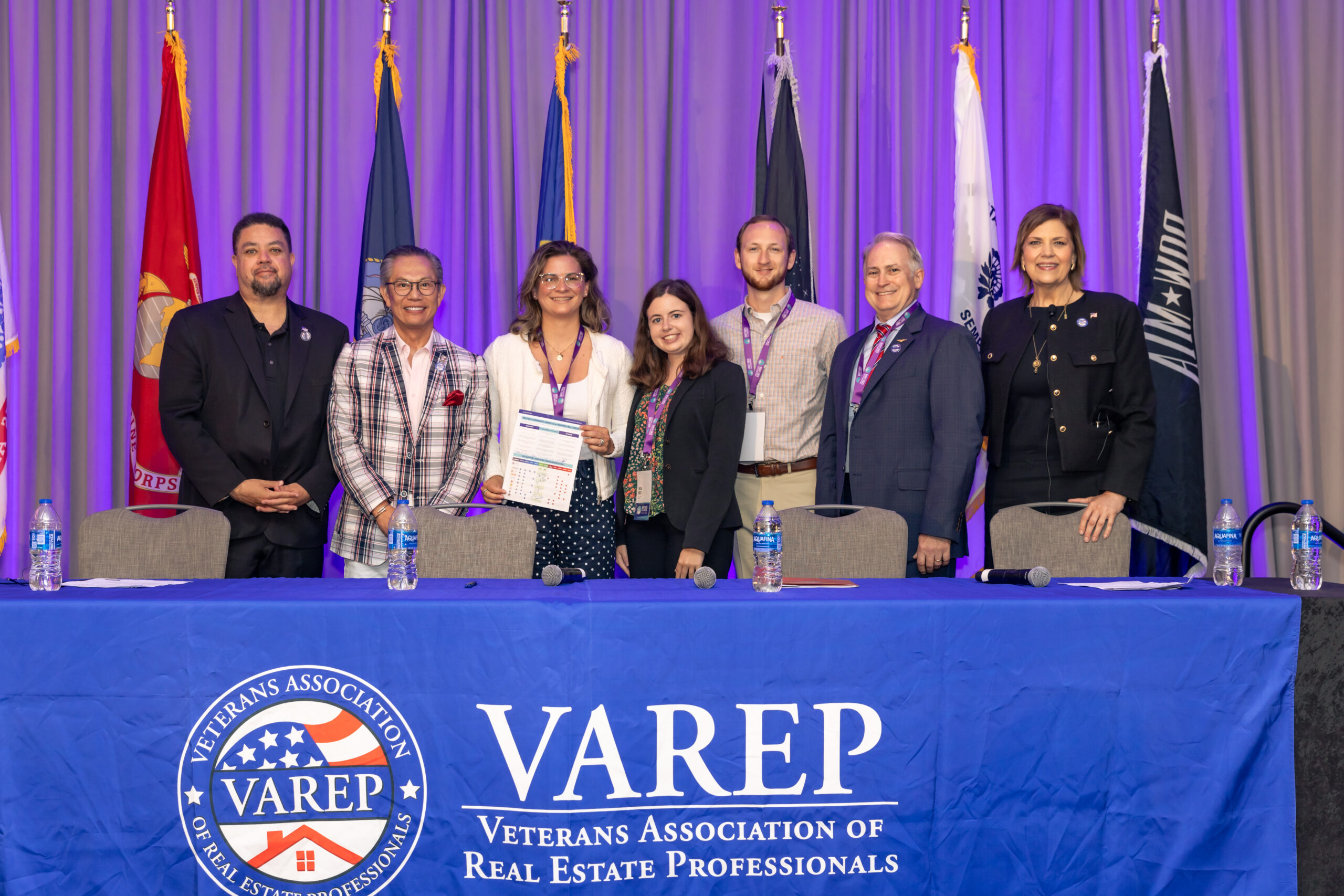
Members of the With Honor team joined VAREP earlier this year at their annual Policy Conference in Washington, D.C.

Explainer: Why the U.S. Must Act Now to Hold Russia Accountable and Learn from Ukraine’s Lessons on Readiness and Resilience

A Nation Tested by War and a Call for American Leadership

Russia’s illegal invasion of Ukraine has now entered its fourth year. What began as an unprovoked act of aggression has become a prolonged humanitarian catastrophe: more than 19,000 Ukrainian children abducted, millions displaced, and civilian infrastructure targeted in daily attacks.

This conflict is not just Ukraine’s fight. It is a test of whether the world’s democracies, led by the United States and our European allies, will stand firm against terror and tyranny, or allow impunity to take root.

That’s why With Honor Action is proud to endorse H.R. 5797 / S. 2978 — the Designating the Russian Federation as a State Sponsor of Terrorism Act.

Introduced by Rep. Brian Fitzpatrick and Sen. Lindsey Graham, with cosponsors from both parties in both chambers, the legislation would require the Secretary of State to designate Russia as a State Sponsor of Terrorism unless it returns the thousands of abducted Ukrainian children.

“Russia’s brutal invasion has torn tens of thousands of Ukrainian children from their families; abducted, orphaned, or forced to flee their homes. These are not acts of war; they are acts of terror,” said With Honor Co-Founder & CEO Rye Barcott. “With Honor Action endorses this bipartisan legislation that finally names the Russian Federation for what it is — a state sponsor of terrorism — and gives the United States new tools to hold Putin’s regime accountable for these unconscionable crimes against humanity.”

Holding Russia Accountable: Sanctions with Purpose

The United States has expanded sanctions on Russia’s energy sector, blacklisting two of its largest oil companies and dozens of associates. These new sanctions are designed to cut off the Kremlin’s war revenues and send a clear message: America will not bankroll aggression.

But sanctions alone are not enough. History shows they work best when paired with strategic resolve — including legislative action, diplomatic alignment, and domestic readiness.

While sanctions weaken Russia’s economy, Ukraine’s battlefield success has come from something sanctions cannot stop — innovation. The next front in this conflict isn’t only economic but technological – fast-moving, adaptive, and defined by creativity under fire.

Innovation Forged on the Front Lines: Lessons from Ukraine

At the 2025 Association of the U.S. Army conference, Army Secretary Dan Driscoll delivered a simple but transformative message:

“Move fast. Break procurement.”

Ukraine’s experience has proven that victory depends on agility. As Secretary Driscoll stated:

“If you look at Ukraine, they’re updating their software on their drones every two weeks. We as a nation would have struggled to do it within two years. We’re having to retrain the entire Pentagon that the bigger threat is inaction rather than fast action — with a little bit of scrappiness required.”

That “scrappiness” has become the hallmark of Ukrainian defense.

According to the Snake Island Institute’s report, The Black Sea’s Asymmetric Blueprint, Ukraine has:

  • Employed unmanned surface vehicles (USVs) and integrated them with aerial drones and precision fires, despite starting with no functioning naval fleet.
  • Achieved decisive engagements, including the destruction of multiple Russian vessels such as the Ivanovets missile corvette (Jan 2024) and the Caesar Kunikov landing ship (Feb 2024) via coordinated USV strikes.
  • Established an industry-military feedback loop: platforms such as “Sea Baby” and “MAGURA V5” were refined through continuous frontline feedback, showing combat-driven R&D cycles measured in months rather than years.
  • Demonstrated favorable cost-exchange ratios: relatively low-cost unmanned assets inflicted outsized damage on complex, high-value Russian vessels, such as the sinking of the Moskva, a Russian guided missile cruiser and the flagship of the Black Sea fleet.

The implication for the future of U.S. defense posture:

  • Modern littoral operations don’t necessarily require large capital ships; distributed, unmanned systems can achieve sea denial. 
  • Naval doctrine must shift: Unmanned, distributed, and attritable systems should transition from supporting to foundational capabilities.
  • The U.S. force design must incorporate faster innovation cycles, industry-military feedback loops, and break rigid procurement timelines.

Ukraine’s ability to adapt on the fly reveals a truth the U.S. military is rediscovering: readiness depends on flexibility, not just funding. That same spirit of self-reliance is now driving a new effort here at home to ensure America’s warfighters can keep their equipment and themselves mission-ready.

Fix, Fight, Win: The Case for the Warrior Right to Repair

Inspired in part by Ukraine’s battlefield adaptability, For Country Caucus members Representatives Maggie Goodlander (D-NH) and Jen Kiggans (R-VA) have introduced the “Warrior Right to Repair Act” – bipartisan legislation ensuring American service members can repair and maintain their own equipment in the field.

This reform would:

  • Cut repair times by allowing troops to fix critical systems on-site.
  • Strengthen supply chains by reducing reliance on single-source foreign components, particularly from China.
  • Build resilience by ensuring America’s forces and its allies can operate independently under pressure.
  • As Ukraine’s front-line experience shows, modern warfare rewards speed, creativity, and self-sufficiency.

Empowering troops to repair what they fight with is only one side of the readiness equation. The other is ensuring these tools, and the parts behind them, come from secure, reliable sources, not from adversaries or fragile supply chains.

Vulnerable Links: Why Supply Chains Are a National Security Issue

Russia’s invasion exposed a deeper, global vulnerability: the fragility of Western defense supply chains. The Snake Island Institute’s recent report on supply chain analysis highlights some key vulnerabilities in our global supply chain:

  • Ukraine’s unmanned aerial systems (UAS) production remains highly dependent on Chinese-produced components, including motors, flight controllers, lithium-ion batteries, navigation systems, and thermal sensors.
  • Nearly 97% of Ukrainian manufacturers identified China as a primary source of imports; in the first half of 2024, roughly 89% of UAS-related imports by value were still sourced from China.
  • While Ukraine has begun to develop domestic manufacturing capabilities, key components such as rare-earth magnets, advanced machining tools, and specialized optics still depend on foreign supply and remain vulnerable.
  • China’s control over drone/component supply chains means it holds a potential lever over not just Ukraine’s war effort, but the broader Western defense industrial base.

For the U.S., the implication is clear:

  • We must diversify and secure defense supply chains, invest in domestic production of critical components (motors, sensors, controllers, batteries).
  • We need to lessen our reliance on adversarial supply chains—particularly those tied to China—by leveraging incentives, strengthening public-private partnerships, and deepening industrial cooperation with our allies.
  • We must treat industrial-base readiness as a national-security imperative, not simply a procurement line item.

Securing America’s industrial base will take deliberate investment, strategic cooperation, and legislative resolve. The good news is that the roadmap already exists — if we have the will to act on it.

Meeting the Moment: A Roadmap for Action

Ukraine’s struggle offers both a warning and a blueprint for others. Supporting its fight for freedom is about learning—and acting—now.

The steps ahead are clear:

  • Pass the Designating the Russian Federation as a State Sponsor of Terrorism Act (H.R. 5797 / S. 2978) to officially designate Russia as a State Sponsor of Terrorism.
  • Pass the Sanctioning Russia Act of 2025 (H.R. 2548 / S. 1241) to apply additional and secondary economic sanctions on Russia.
  • Expand and enforce sanctions on Russian state-owned enterprises and energy sectors.
  • Reshore and secure U.S. defense supply chains to eliminate dependencies on adversarial nations by passing the Critical Minerals Partnership Act (H.R. 4391 / S. 2550).
  • Maintain bipartisan unity on sanctions, humanitarian aid, and deterrence.

These measures are more than policy proposals; they are a test of leadership and principle. What’s at stake is far greater than any single piece of legislation — it’s the measure of who we are as a nation.

Why It Matters for America

When a regime kidnaps children, targets hospitals, and silences dissent, the response cannot be partial. It must be principled, bipartisan, and strong. 

But just as important, this is a wake-up call at home. Our own readiness — technological, industrial, and moral — will determine whether the U.S. can meet future crises with confidence. Ukraine’s courage shows what happens when innovation meets necessity. America must meet this moment with the same determination.

Standing with Ukraine is about more than foreign policy; it’s about affirming the values that define American strength. The time for speeches has passed; the time for action is here.

Turning Resolve into Results

The world is watching. Congress is acting. The White House is weighing its next move.

The question is not whether the U.S. will respond, but whether we will lead.

Designate Russia as a State Sponsor of Terrorism. Enforce and expand sanctions. Empower our warfighters. Secure our industrial base.

That’s what American leadership looks like.

Warrior Right to Repair: Empowering Soldiers and Enhancing Readiness

Readiness, Innovation, and the Right to Repair

At this year’s Association of the U.S. Army (AUSA) conference, Secretary of the Army Dan Driscoll delivered a message emphasizing the urgency of modernization: “move fast, break procurement.”
Drawing lessons from Ukraine’s battlefield ingenuity, Driscoll warned that the U.S. military cannot afford decade-long procurement programs or rigid bureaucracy.

“If you look at Ukraine, they’re updating their software on their drones every two weeks. We as a nation would have struggled to do it within two years,” Driscoll said. “We’re having to retrain the entire Pentagon that the bigger threat is inaction rather than fast action, with a little bit of scrappiness required.”

That same mindset drives the Warrior Right to Repair Act — a bipartisan initiative that empowers service members to repair their own equipment, speed up maintenance, and keep America’s fighting force ready to respond.

From Battlefield Innovation to Legislative Reform

Every hour that equipment is down for maintenance is an hour it’s out of the fight. Yet too often, troops must wait for contractors — sometimes halfway across the world — to provide parts, tools, or technical data for even routine repairs.

This dependency slows operations, increases costs, and limits flexibility. Recognizing the right to repair is about more than efficiency; it’s about ensuring the U.S. military can act with autonomy, agility, and resilience when it matters most.

The Warrior Right to Repair Act (H.R. 5155 / S. 2209) was reintroduced earlier this year on a bipartisan, bicameral basis by Senators Elizabeth Warren (D-MA) and Tim Sheehy (R-MT), and Representatives Marie Gluesenkamp Perez (D-WA), Jen Kiggans (R-VA), and Maggie Goodlander (D-NH), with Kiggans and Goodlander—both Navy veterans and members of the For Country Caucus—co-leading the bill in the House.

Versions of this legislation have been incorporated in both the House and Senate-passed versions of the FY26 National Defense Authorization Act (NDAA).

A Commonsense Fix with Broad Support

Momentum continues to grow for incorporating right-to-repair provisions across the Department of Defense.

Rep. Maggie Goodlander’s amendment, requiring contractors to provide “reasonable access to repair materials,” was adopted in the House Armed Services Committee’s version of the NDAA.

In the Senate, the Armed Services Committee included language in its version of the bill that would require contractors to provide “Instructions for Continued Operational Readiness” (ICOR), ensuring access to technical data, software, and documentation for in-house repair and maintenance.

A September 2025 Government Accountability Office report reinforced the need for reform, highlighting that major programs, such as the F-35 and Littoral Combat Ship, lack critical data rights, which results in sole-source contracts, higher costs, and longer maintenance times.

In testimony and interviews, Secretary Driscoll has consistently made clear that reforming sustainment is essential to readiness:

“If we think about engagement with a peer like China, being able to repair our parts in areas around the world will be crucial to that. And, if we are having six-month delays in CONUS and paying 100x the rate, that is not scalable in an actual conflict.”

Our Commitment to Warrior Right to Repair

We support the Warrior Right to Repair Act because it strengthens our national defense by returning control, agility, and problem-solving power to the people who need it most — our service members.

Every hour a piece of equipment waits on a contractor instead of being fixed in the field is an hour of lost readiness. This legislation ensures that the men and women defending our nation have the authority, tools, and technical data to make critical repairs when and where they’re needed.

That empowerment also saves taxpayer dollars and reduces waste tied to sustainment contracts — freeing up resources to invest in modernization, training, and innovation. It’s about ensuring that our military can move as fast as the challenges it faces and that our troops have the independence and trust they deserve.

Right to Repair isn’t just a policy reform. It’s a critical readiness issue. It’s a reaffirmation that trusting those who serve to act, adapt, and innovate makes our nation stronger, safer, and better prepared to meet the challenges ahead.

Bottom Line

The Warrior Right to Repair Act isn’t just about fixing equipment; it’s about fixing how we think about readiness. In modern warfare, agility is as critical as armor. Our troops must have the authority and tools to adapt in real time, not wait for permission or paperwork.

By empowering service members to repair and sustain their own equipment, we strengthen the core of America’s defense: the initiative and ingenuity of those who serve. Every faster repair, every cost saved, and every mission that moves forward without delay translates directly into greater operational readiness.

In today’s modern battlefield, speed is crucial, and our military should focus on outpacing our adversaries, not our bureaucracy.

Why AI Legislation Matters Right Now

Protecting America’s Future

Artificial intelligence is reshaping the world in medicine, industry, finance, and national security. But as AI systems become more capable, the risks are rising just as fast.

At With Honor Action, we believe principled leadership demands we act now by building upon our previous work with the National Security Commission on Artificial Intelligence (NSCAI) and the Special Competitive Studies Project (SCSP). That’s why we are endorsing three bipartisan bills: the Chip Security Act, the No Adversarial AI Act, and the No DeepSeek on Government Devices Act, bills that secure U.S. innovation, protect data, and strengthen our democracy.

Why the Moment Is Urgent

Americans expect action.

A September 2025 Gallup survey commissioned by our partners at SCSP found that 80% of Americans believe the government must prioritize safety and data security in AI development, even if that slows innovation.

Importantly, there is bipartisan support: 79% of Republicans and 88% of Democrats agree. Public opinion is clear: Americans want AI regulation that protects both innovation and national security.

Experts have warned us for years.

The NSCAI concluded in its Final Report that “America is not prepared to defend or compete in the AI era.” The report underscored the need to secure the semiconductor supply chain, invest in AI talent, and set ambitious governance goals to ensure U.S. leadership.

The private sector sees it too.

At the WIRED AI Power Summit, policymakers, industry leaders, and researchers debated the future of AI and regulation. Across sectors, there was consensus: the pace of AI development demands urgent safeguards as adversaries will not wait for us to catch up.

The bottom line: Public opinion, government reports, and private-sector leaders are aligned: America must act now to secure AI.

The Legislation We Endorse

AI infrastructure depends on advanced semiconductors. Yet, the Chinese Communist Party has repeatedly been a bad-faith actor, diverting U.S.-made chips to their military and surveillance networks.

“The Chinese Communist Party has proven time and again that they are bad faith actors when it comes to stealing American innovation. To maintain our AI dominance, we must prevent American technological exports from being diverted into black market bazaars or the back streets of Beijing. With Honor Action is proud to endorse this bipartisan legislation that ensures manufacturers and chipmakers have the tools to identify diversion of our chips and ensure the security and privacy of our sensitive technologies.”

This legislation strengthens export enforcement, equips manufacturers to detect diversion, and ensures U.S. chips power progress—not authoritarian control.

While the U.S. leads in AI applications for healthcare and manufacturing, many foreign adversaries are racing to weaponize AI against us. The No Adversarial AI Act, led by With Honor Action ally and Navy veteran Senator Gary Peters, bans federal agencies from using AI systems developed by adversaries or under their influence. It also mandates tracking the provenance of AI systems, adding much-needed transparency to supply chains.

“While the United States looks to be a leader in the development of artificial intelligence applications for progress in fields like healthcare, manufacturing, and finance, many foreign adversaries are looking to weaponize this technology against the U.S. The No Adversarial AI Act allows the U.S. to list and track the origins of AI systems and prohibits the use of systems developed by foreign adversaries within the federal government. With Honor Action is proud to endorse this legislation to bring more transparency to AI supply chains and ensure adversaries of the United States are not using this critical technology to threaten our national security or pilfer our innovation.”

  • No DeepSeek on Government Devices Act (H.R. 1121)

DeepSeek, a CCP-owned AI system, poses serious risks if allowed on U.S. government devices. Because it is subject to CCP control, DeepSeek could harvest sensitive data, spread disinformation, and undermine trust.

The No DeepSeek Act, co-led by several For Country Caucus members, including Co-Chair Rep. Don Davis, Vice Chairs Reps. Chris Deluzio and Nick LaLota, and Rep. Seth Moulton, prohibits its use on U.S. government devices, following the precedent of bipartisan bans on adversary-controlled apps like TikTok.

“We’re proud to endorse the No DeepSeek on Government Devices Act! This bipartisan legislation takes a strong stand against the national security threat posed by the Chinese Communist Party’s ownership of DeepSeek. Using this technology on U.S. government devices could expose sensitive data to adversarial influence–a threat we cannot tolerate.”

Bipartisan Leadership in Action

Veterans in Congress understand that readiness saves lives. They know that national security does not stop at physical borders — it extends to data pipelines, AI systems, and the semiconductor supply chain. That’s why members of the For Country Caucus, a bipartisan group of veterans in Congress, are at the forefront of these efforts. Their military backgrounds give them a shared understanding of what it means to be prepared, and their bipartisan cooperation ensures these bills are not about politics — they’re about security.

In a time of increased polarization, America needs Democrats and Republicans working together to tackle the 21st century’s defining security challenges.

Bottom Line

AI holds both promise and peril. Left unchecked, adversarial AI systems threaten our economy, our security, and our democracy. With principled, bipartisan leadership, America can harness AI responsibly.

The three bills we endorse — the Chip Security Act, the No Adversarial AI Act, and the No DeepSeek on Government Devices Act — offer tangible solutions to protect data, secure supply chains, and prevent adversaries from exploiting our systems.

The American people want safeguards. Experts have warned us of the risks. Veterans in Congress are showing bipartisan leadership. The moment for action is now.

With Honor Action is committed to supporting solutions that put security first, innovation on solid ground, and our democracy on a stronger footing.


Join Us Now

* Required Field(s)