

New Gallup-With Honor Institute Poll: Military Experience Tops Candidate Credentials
WASHINGTON, D.C. — A new Gallup survey, conducted in partnership with the With Honor Institute, finds that Americans place greater value on military service than any other credential when evaluating candidates for public office. The research highlights the trust and confidence Americans continue to place in veterans, both as potential elected officials and as community leaders.
The nationwide survey of more than 2,000 adults shows that:
- 55% of Americans say military service makes them more likely to vote for a candidate — compared with 7% who say it makes them less likely.
- Veterans are seen as possessing strong leadership skills, with 83% of Americans agreeing this quality applies to those with military backgrounds.
- Large majorities believe veterans put the country’s interests ahead of their own (78%), work effectively across differences (77%), and understand global security challenges (76%).
“At a time when Americans are searching for leaders they can trust, this research underscores a powerful truth: veterans continue to embody service above self,” said Rye Barcott, Founder and President of the With Honor Institute. “Our collaboration with Gallup affirms that military experience is more than a credential; it’s a proven foundation of integrity, competence, and commitment to the common good.”
Veterans Trusted in Leadership Roles
Beyond elections, the survey also finds Americans trust veterans more than non-veterans in a range of civic and leadership roles:
- 83% of Americans believe veterans possess strong leadership skills.
- 75% believe veterans understand global security issues.
- 70% trust veterans to help leaders make foreign policy decisions.
“These findings show that Americans don’t just value military experience at the ballot box. They see veterans as honorable contributors across many essential roles in society,” said Colonel Michael Tilton, U.S. Army (Ret.), project director at Gallup. “Military service continues to signal leadership, working well with diverse groups of people, and a commitment to the public good.”
Read the full results of the Gallup-With Honor Institute poll here and watch the presentation at the Forum by Colonel Michael Tilton, U.S. Army (Ret.), project director at Gallup.
About the Study
This Gallup-With Honor Institute survey was conducted August 1-15, 2025, among a random sample of 2,132 U.S. adults from the Gallup Panel. Results carry a margin of sampling error of ±3 percentage points at the 95% confidence level.
###
About the With Honor Institute
The With Honor Institute (WHI) is the educational arm of With Honor, a cross-partisan organization that fights polarization in Congress by supporting principled veterans of both parties who take the With Honor Pledge to serve with integrity, civility, and courage. The Institute, a 501(c)(3) nonpartisan nonprofit, educates and supports bipartisan veterans and servant leaders in public service.
About Gallup
Gallup delivers analytics and advice to help leaders and organizations solve their most pressing problems. Combining more than 80 years of experience with its global reach, Gallup knows more about the attitudes and behaviors of employees, customers, students and citizens than any other organization in the world.
For complete results, including trend data and visualizations, visit Gallup.com.
Honoring the Life and Legacy of David Gergen
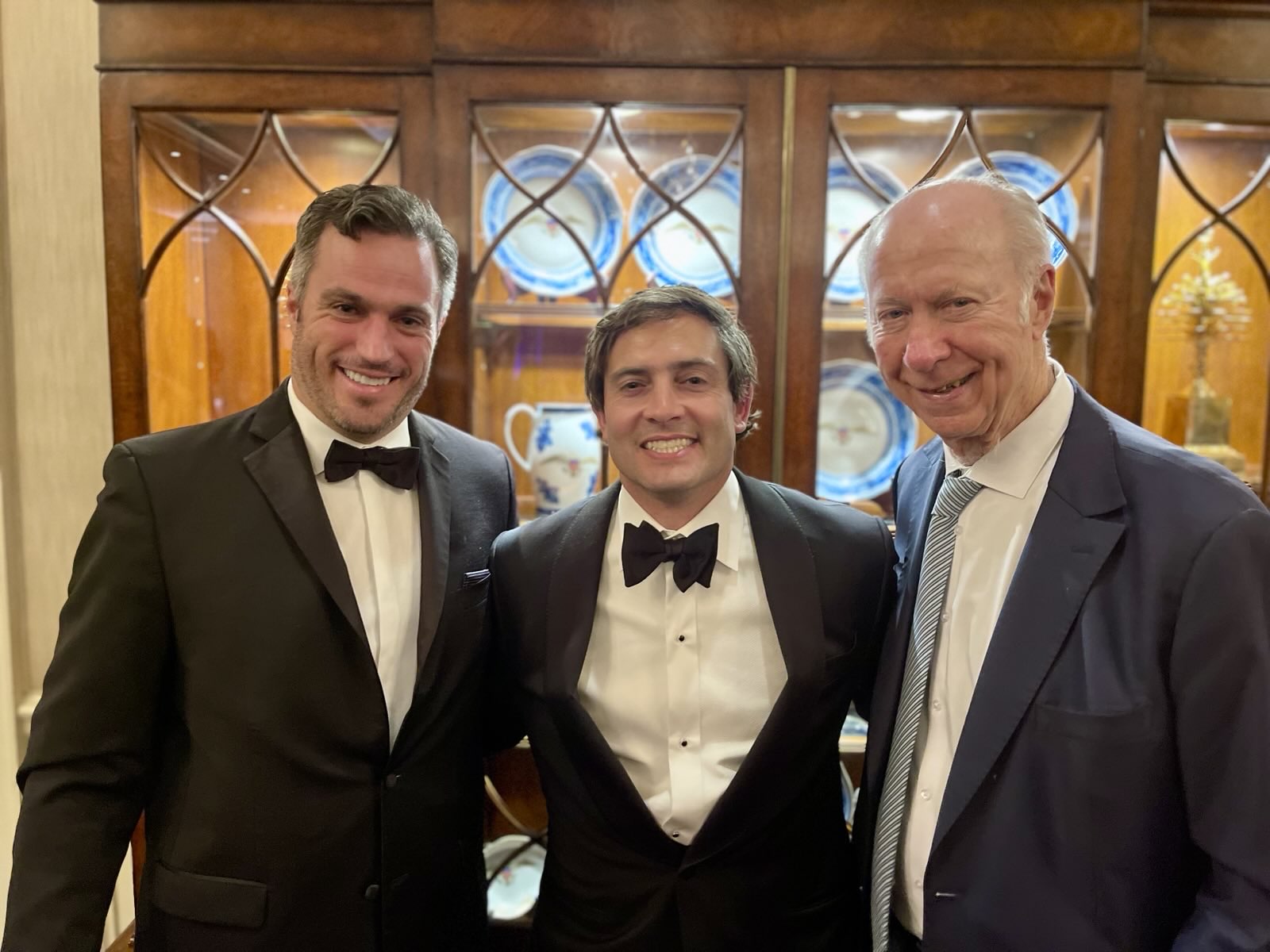
Co-Founders of With Honor Peter Dixon, Rye Barcott, and David Gergen at the With Honor Gala for the 118th Congress.
David Gergen
May 9, 1942 – July 10, 2025
If you would care to contribute something in his honor, please consider giving to the Gergen Public Service Fellowships at Harvard’s Center for Public Leadership via this link.
I’m among the lucky ones to have had David Gergen as a teacher. When I graduated from Harvard Kennedy School in 2009, he became a mentor. Years later, when I started a nonprofit, he became a cofounder. Now, he is a cherished friend.
An action-oriented person, I think David would most appreciate my sharing in a tribute to him advice that I learned from him that can be useful to others pursuing lives of service. Here are five pieces of advice I gained from the great good fortune of knowing David Gergen.
Lesson one: use lists
I might as well start with this one, perhaps the most pragmatic pieces of advice from David.
Months after completing my third overseas tour as a Marine in Fallujah, Iraq, I joined the Kennedy School on a fellowship David had established with veterans in mind at Harvard’s Center for Public Leadership (CPL). I knew I wanted to study under David. He was one of the few balanced voices of reason on cable news, and I had watched television anchors and commentators with keen interest ever since replying to a second-grade survey on what I wanted to be when I grew up with, “Tom Brokaw.”
Unfortunately, David’s class was full my first semester. We had met through a mutual friend in North Carolina, and I had a more of a personal relationship with him from the outset because we shared ties to the Old North State, where he grew up, and where I earned my bachelor’s degree and intended to settle after graduation with my amazing [University of North Carolina Chapel Hill] Tar Heel wife. So, I approached him one day and proposed an independent study on speechwriting, which he had a singular point of view on, having written and edited speeches for four sitting U.S. presidents. While David had not offered an independent study focused on speechwriting before, he was interested in new ideas, appreciated my initiative, and wanted to help me with my career development.
Of course, his time was stretched well beyond that of a typical overworked professor. In addition to teaching, David directed CPL, where he created and grew four new national fellowship programs for graduate students. He also spoke to groups around the United States, wrote books, and provided commentary each week as a CNN senior political analyst. Nonetheless, he thought about my proposal, and suggested that each week I come to his home library, select a book, read it, and discuss it together the following week. I knew instantly that it was a once-in-a-lifetime opportunity.
What I didn’t realize initially was that each book included David’s own handwritten notes in the margins. The notes were obviously a gift for me, but they were also a source of intrigue for David, who in most cases had not revisited his initial observations, some of which were written when he was in the arena advising presidents and making history. The history he made started early in his career. His first job in the Nixon White House resulted in his penning Nixon’s resignation letter.
“No one else was around,” he joked on his 80th birthday, recalling the moment to friends. The letter, addressed to Henry Kissinger, was certainly to the point. “Dear Mr. Secretary,” David Gergen wrote for Richard Nixon, “I hereby resign the Office of the President of the United States. Sincerely,’
David’s handwritten reflections in the books included many candid moments, such as “not true” next to hagiographic excerpts in books about Nixon and Johnson, and “yes!” beside content he agreed with. Passages about the importance of service were often underlined, including a passage that formed the basis of a future book David would write, and which I reference at the end of this tribute.
There were so many learnings I pulled from this inimitable deep dive on speechwriting with one of our nation’s great speechwriters. A common thread across nearly all of the books was the utility of lists in speeches to distill and package ideas effectively, and to help capture attention in a cluttered world. David often affirmed this technique in our sessions together, and he recalled how he thought about it when he took over as editor of U.S. News & World Report. Under his leadership, the magazine became best known for its annual rankings lists, the most notable of which continues today to rank universities and colleges.
Whenever I deploy a list in my writing or public speaking—as I am doing at this moment—I think of David and that remarkable time in his home library with his books.
Lesson two: you can’t influence every audience
You can influence a lot when you have as much respect and skill as a communicator as David Gergen. But you can’t influence every audience.
I returned to Boston for a reunion of fellows of Harvard’s Center for Public Leadership at the famed New England Aquarium. It was a significant occasion to celebrate CPL’s stunning growth of fellowships under David’s leadership. We had the entire aquarium to ourselves, for the most part. David opened the evening at the podium.
“Good evening, fellows, friends, and family,” he began.
“Honk,” something sounded.
David paused. He raised an eyebrow. The noise stopped.
He continued. “It’s an honor to be with you all. …”
“Honk, honk.” Two penguins shuffled behind the podium, chins up.
David stopped. The penguins stopped.
He smiled, acknowledged the penguins, and began again with his remarks.
“Honk, honk, HONK.” The din grew louder.
He paused, and remarkably, the penguins stopped honking.
“Tough crowd,” he observed. Gradually, as he spoke, more penguins began honking. The two penguins behind the podium appeared on top of each other.
“HONK HONK HONK.”
It was a cacophony of randy penguins, and there was nothing David Gergen could do about it.
He read the room and pivoted: “Well, that settles it then. Go forth, fellows, and multiply!” David concluded the formalities of the evening.
Years later, “honk” became a code whenever a group of us who had been in the room where it happened reconnected with David. One spectator wondered aloud if the penguins had been attracted to the timbre of his voice: baritone, smooth, and inviting.
David loves this memory. He loves to laugh.
Although David would often note that it was important to define a primary audience when writing a speech, another headline for this piece of advice could be about having a sense of humor. On this, he once wrote: “What good leaders understand is that a capacity to laugh at anxieties and absurdities of modern life won’t solve your problems but will help you get through them.”

A moment from the “Penguin Night” at the New England Aquarium with (L-R): Brad Davis, Rye Barcott, Jess Anderson, Max Anderson, and David Gergen. Photograph by Tom Fitzsimmons.
Lesson three: the past informs the future
David often reflects on history to make more informed decisions and tell stories that inspire change. This was as true in his role advising presidents, as it was in his own writing, television commentary, and advice to mentees. One of his former research assistants referred to it as his superpower.
I benefited often from his historical wisdom, but none more so than at one of the most pivotal junctures in my career. I was considering leaving a relatively successful business career in my late 30s to start a nonprofit with Peter Dixon, a friend from the Marines who was also a mentee of David. Peter and I noticed a surge of post-9/11 veterans preparing to run for office in the 2018 midterm elections. Some of these veterans were our peers, including my business partner, Dan McCready, another Marine and Iraq War veteran. Could the next generation of veterans help lead our nation and combat the crippling polarization in Congress by working together across party lines?
Intuitively, we thought the answer was yes. We knew from our personal experiences that military service is a great equalizer. It forges bonds between Americans from all walks of life, young men and women united in service to something larger than oneself. Moreover, veteran representation in Congress had declined from over 70% to under 20% over our lifetimes as polarization in the first branch of our democracy had skyrocketed.
Nonetheless, we had no political or policymaking experience. So, I viewed David’s reaction to the idea as the initial stage gate. He was the most respected bipartisan leader I knew. He cared about my career and knew many of my own strengths and shortcomings.
David listened intently as I described a character-based pledge that would form the backbone of the organization we started calling “With Honor.” Any veteran we supported would need to pledge to serve with integrity, civility, and courage, I explained, especially the courage to work across party lines. We would evaluate character through veterans with whom candidates had served, many of whom had served in combat. Combat is the ultimate test of character. We would launch a political action committee that would help the most talented and competitive of the veterans run for Congress and win, especially in primary races, where veterans often faced a massive disparity in resources. After all, they had spent their early adult years in service to the nation.
Characteristically, David reacted first with historical context. He recalled working with bipartisan veterans on the national stage whose relationships together made a consequential impact, such as Senators Dan Inouye and Bob Dole. Dole and Inouye had first forged a friendship recovering together from grievous wounds in combat in WWII. He spoke also about the transformative impact of military service on Presidents Truman, Eisenhower, Kennedy, Carter, and H.W. Bush. On this theme, he would later write:
“I would not pretend the leaders of the World War II generation were perfect. They weren’t. … But on the whole that generation raised our sights about what is possible when our civic culture is strong and our leaders work across divides. On their watch, the country went to the moon, created the Peace Corps, passed major legislation advancing the causes of women and communities of color, reformed Social Security, created world-class universities, and invested heavily in science and technology. And by the way, they won the Cold War without firing a shot directly at the Russians. … United and well led, the World War II generation proved that, when inspired, we are a can-do people.”
David brought up two of the first post-9/11 veterans who had recently been elected to Congress: Rep. Seth Moulton, whom David had mentored as a Harvard College student, and Rep. Mike Gallagher, who had earned a PhD from Princeton. I knew Seth and Mike from the Marines. They were exceptional, and I planned to call them as a next step if the meeting with David went well.
The meeting was going well. David concluded it with the essential question: had veterans in Congress been more bipartisan than non-veterans?
I didn’t know the answer. There had been no outside measure of it. David encouraged me to reach out to a political science professor who helped run an analysis using data on voting in Congress and sponsorship of legislation. The result became our validation: Members of Congress with military service as a group had been more bipartisan than members of Congress without military service since World War II.
David had guided me to a narrative tied to our history and backed by data. With that, I went for it. I turned my best hours to With Honor, and asked David to join as a co-founder. He graciously agreed and months later introduced us to our largest early backer, who remembered through our mission his friend, the late U.S. Marine and Astronaut, Senator John Glenn.
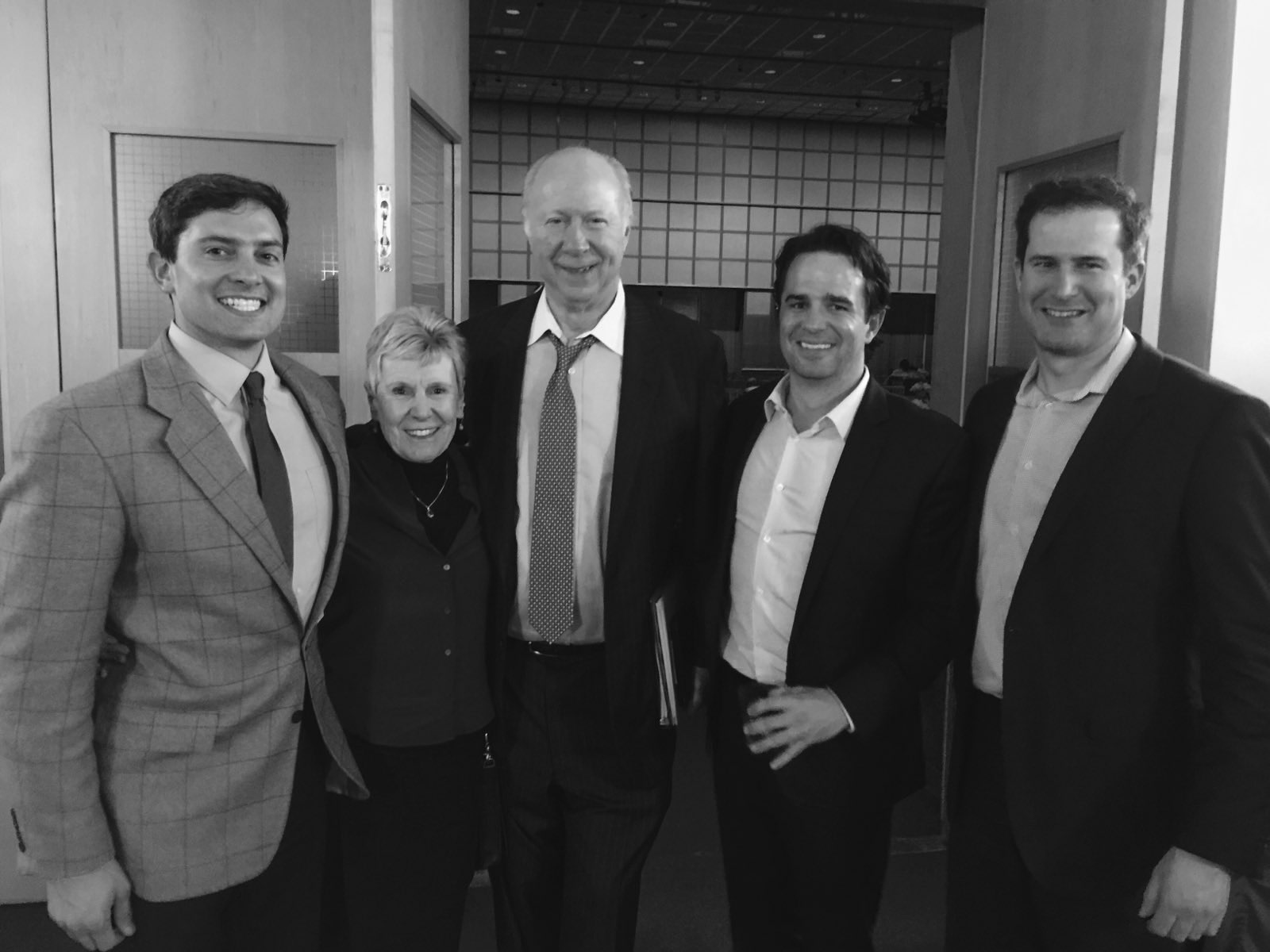
David and Anne Gergen at a Center for Public Leadership 2015 Reunion with mentees Marine Corps veterans (L-R) Rye Barcott, Jake Cusack, and Seth Moulton.
Lesson four: remember the Golden Rule
I never actually heard David mention the Golden Rule, the moral principle that states you should treat others as you would want to be treated. Living the Golden Rule can be challenging when you have a full life with many demands on your time. For students, myself included, getting time with David could be extremely challenging. You had to really work to get on his schedule. Most students just gave up after a try or two. Some even took it personally.
“He isn’t replying to my emails,” many a Harvard student thought, and at least one wrote. “I pay to go here!”
Nonetheless, if you take the time and stay politely persistent, you generally get the time. And when you get the time, he is there for you. His natural instinct is to help. He is a helper, and he is kind to people regardless of their station in life. Gracious to wait staff at dinners, taxicab drivers, custodians, strangers who wanted photos–you name it.
As the country’s polarization deepened, the commentary on cable news became louder and more obnoxious. I saw David Gergen on television hundreds of times in the past 20 years. I never once saw him lose his cool. After one particularly ridiculous moment, when David was in between two accomplished people yelling at each other, I asked him how he managed to keep his composure. He said he tried to understand where people were coming from, speak to those ideas, and not take things personally. “But it can be difficult,” he added with a laugh.
Many people know David from some level of personal interaction. Regardless of the depth of their relationship, people always speak to what a good person he is. It’s remarkable. I never hear criticism, apart from the occasional quips about how to find more time with him. For those he knows well, he is an exceptional friend, the type who genuinely wants the best for you, celebrates your successes, stays present through your setbacks, and can always, always be trusted.
His kindness and concern for others carry over to his children, who are living service-oriented lives and also benefited from an amazing mother, David’s wife Anne, who is a psychologist and a beautiful writer in her own right. Of Anne, David wrote in the final lines of his first book, the masterpiece Eyewitness to Power:
“Public service demands its greatest sacrifices not from those in government but from their loved ones. They experience many of the hardships and few of the rewards. I was blessed that my wife, Anne, stood by me, nurtured our children in their early years, endured the long days of isolation, and, in the midst of all that, flowered into the woman she has become.”
Christopher Gergen, David’s son, had told me that it would be understandable for his father to feel angry, frustrated or at least a little bit grumpy as his body and mind fight the brutal disease that is Lewy body dementia. But no, he is as kind and as gentle as ever to everyone who interacts with him, from his family to his neighbors, who include his longstanding colleague Joe Nye, a steady stream of old friends and mentees, and of course the nurses and other caregivers. David Gergen has perhaps never said the Golden rule. He just lives it.
Lesson five: leadership at its best is service to others
If this were a ranked-order list, this might be the first bullet for David’s advice on leadership, though it is also fitting as the last. Nearly every interaction I have had with David involves the theme of service. After the first election cycle with With Honor, we helped elect or re-elect 19 members of Congress to work across party lines, including Reps. Seth Moulton and Mike Gallagher. What would this group organize around initially across party lines?
David guided us to voluntary national service, and it became one of the three key pillars of the Congressional caucus. Voluntary national service is immensely popular in polling across party lines throughout the nation. Yet fewer than 1% of young Americans now serve in the military, and fewer than 5% serve in civilian capacities or public service jobs such as teachers and nurses.
With David’s encouragement and the support of many in his vast network of friends, we’ve since helped pass laws to expand AmeriCorps and Junior ROTC in high schools across the nation. This will be an enduring focus of commitment for With Honor.
After With Honor’s first gubernatorial candidate was elected, Maryland Governor Wes Moore, David and I flew to Baltimore to see him. “Service will save us,” Governor Moore had proclaimed on the campaign trail. We were thrilled to learn that the very first bill Wes intended to initiate focused on national service. The SERVE Act, since passed into law, created a service year option for Maryland youth.
In 2022, David published his final book. The book’s title is inspired from the words of Oliver Wendell Holmes, Jr. Holmes, who had been left for dead on the battlefields of the Civil War, fought for African American rights and became one of the most consequential Supreme Court justices in U.S. history. Holmes said in a Memorial Day speech to veterans and their families in 1884:
“As life is action and passion, it is required of a man that he should share the passion and action of his time at peril of being judged not to have lived. … Through our great good fortune, in our youth, our hearts were touched with fire. It is given to us to learn at the outset that life is a profound and passionate thing.”
David’s view on service is best embodied in his own words reflecting on these lines by Holmes. David wrote in his final book, Hearts Touched With Fire: How Great Leaders are Made:
“What a glorious way to capture what so many young men and women have experienced in one era after another in committing themselves to civic life, seeking to create a fairer, more just, and more peaceful world. Life will hold perils, but in devoting yourself to the service of others, you find satisfaction that transcends your troubles. As many have discovered, service and leadership are inextricably bound together. Indeed, leadership at its best is service to others.”
Our nation owes a debt of gratitude to David, one of the few who makes it his life’s work to serve our country and his fellow citizens. Service comes in many forms, and many of us who consider David a friend and mentor serve in uniform. But his life shows us that anyone can serve and that service can save us. Our country’s brightest days can still be ahead of us through service to one another. He impresses upon us a lifetime devoted to this cause. And we, all of us who know him, are better people for knowing him. Thank you, David.
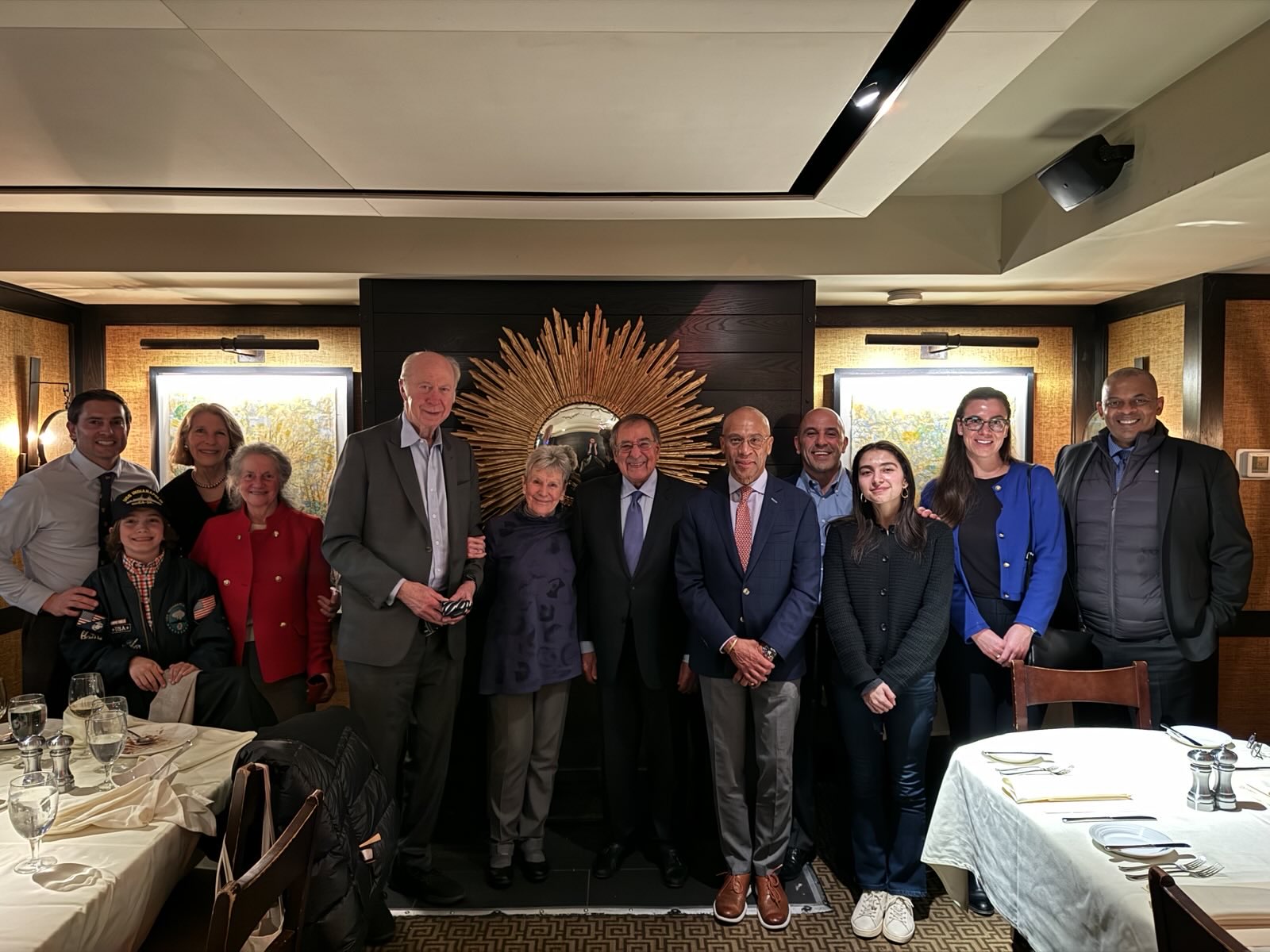
February 12, 2024, Harvard Center for Public Leadership dinner after a Kennedy School Forum keynote on public service and bipartisan leadership co-hosted by With Honor with David’s colleague former Secretary of Defense Leon Panetta, who has been a champion for national service along with his son, Rep. Jimmy Panetta, who is the founding Co-Chair of the For Country Caucus. Joined by Governor Deval Patrick, David R. Gergen Professor of the Practice of Public Leadership, and Secretary Anthony Foxx, Director, Center for Public Leadership.
WHA Letter to Congressional Leadership Urging the Passage of the Fulfilling Promises to Afghan Allies Amendment
Dear Leader Schumer, Leader McConnell, Speaker Johnson, and Leader Jeffries,
We write to urge you to include the Fulfilling Promises to Afghan Allies Amendment in the National Defense Authorization Act for Fiscal Year 2025. This measure is critical to standardizing additional vetting in the pathway to legal permanent status for eligible Afghans who were relocated to the United States due to the U.S. military withdrawal.
The October 2024 arrest of Nasir Ahmad Tawhedi, someone the U.S. Department of Justice has charged with conspiring with the Islamic State of Iraq and al-Sham (ISIS), underscores the urgency of this legislation. Tawhedi was admitted to the United States on temporary humanitarian parole status without a specified avenue for additional vetting aligned with the rigorous standards that the Fulfilling Promises to Afghan Allies Amendment would implement. This legislation’s 13-step national security and background checks would require interagency reviews, spanning the Federal Bureau of Investigation, Department of Homeland Security, and Department of Defense, as well as mandatory in-person interviews.
As veterans organizations serving veterans across the country, including those of the Global War on Terrorism, we know firsthand the moral and national security imperative of keeping our promises to the Afghan nationals who supported the U.S. mission and were admitted to the United States under emergency circumstances. By requiring applicants to undergo a rigorous, gold-standard vetting process, and placing those who pass and are eligible on a pathway to legal permanent status, passing the Fulfilling Promises to Afghan Allies Amendment would help alleviate any remaining security concerns about the Afghan humanitarian parole recipients in the United States. Without this legislation, we leave these Afghans in a state of legal limbo and without a comprehensive remedy for vetting concerns.
That is why the undersigned national veterans organizations urge Congress to pass the Fulfilling Promises to Afghan Allies Amendment in the NDAA or any appropriate end-of-year package.
Sincerely,
Association of Wartime Allies
Blue Star Families
National Guard Association of the United States
No One Left Behind
Operation Recovery
Special Operations Association of America
Special Forces Association
Student Veterans of America
The American Legion
Tragedy Assistance Program for Survivors
Veterans of Foreign Wars
With Honor Action
Blue Star Families
National Guard Association of the United States
No One Left Behind
Operation Recovery
Special Operations Association of America
Special Forces Association
Student Veterans of America
The American Legion
Tragedy Assistance Program for Survivors
Veterans of Foreign Wars
With Honor Action
Op-Ed: A nonpartisan way to make a difference this election
A nonpartisan way to make a difference this election
By Rye Barcott
In December 2005, my Marine regimental combat team planned to provide security for elections in Fallujah, one of Iraq’s most violent cities. We anticipated a volatile day with low voter turnout. After all, very few people voted in Fallujah in the prior election just 11 months earlier.
That Election Day, as the sun rose, I watched from a machine gun turret as scores of Iraqi poll workers in Fallujah set up local polling stations. The presence of these local poll workers, few of whom wore protective flak jackets, helped instill confidence with other war-weary residents. Shockingly, by evening, more than 70% of eligible Iraqi citizens had risked their lives and voted in Fallujah. My experience in Iraq gave me an even greater appreciation for our system of elections here in the U.S. As vitriolic and divisive as our politics can be today, election administrators across the country work hard to ensure our elections are free, safe and accessible to all eligible voters.
Even so, in this time of division and chaos, it’s difficult for many Americans to think about ways they can actually make a difference in our civic life. It’s a natural instinct to disengage. This is especially true for the near majority of Americans who don’t want to be partisans; according to Gallup, 43% of Americans now identify politically as independents.
However, this election season, regardless of political affiliation, any American can do something that can make a difference: take a day, work the polls.
According to the Election Assistance Commission, it takes about 1 million poll workers to responsibly execute a general election in a presidential election year. And election administrators across the country are facing critical needs for poll workers as we barrel ahead toward what may be one of the most contentious elections in our history, and at a time when public confidence in elections is waning.
Poll workers are the guardians of electoral integrity. These normal citizens check in voters, answer technical questions, ensure unfettered access to ballots, verify voter eligibility, and help citizens with language limitations or disabilities participate in their civic duty.
Years after my military service in Iraq, I witnessed a similar scene in Kenya, a relatively young multi-party democracy where I volunteered as an election monitor with the Carter Center and the International Republican Institute. Thousands of Kenyans of all ages volunteered and worked the polls, many of them for more than 14 hours, setting up before dawn and turning in well after dusk.
American poll workers may also be asked to work 14 hours on Election Day (though some jurisdictions do offer shifts, and the role is almost always paid). All poll workers — whether for elections in Iraq, Kenya, or here in America — play a similarly important and inspiring role in the democratic process.
Inspired by these experiences, I recently joined the Advisory Council of Power the Polls, a national, nonpartisan initiative committed to recruiting the next generation of poll workers to ensure fair, free and accessible elections. Through Power the Polls, you can quickly find the local poll worker requirements, schedule, pay, and apply to work the polls in your community.
Serving as a poll worker increases trust in the elections process. Poll workers often find their experiences rewarding, and are eager to serve again.
Our nation gives freedoms and opportunities unimaginable to most humans who have ever lived. America doesn’t ask much in return. For most citizens, the only service that’s actually required is jury duty, if summoned. In fact, fewer than 2% of Americans now serve in military or civilian service in the United States.
Full-time service is not realistic for many Americans. Nonetheless, those Americans are serving you. In the military, they are defending your freedoms. In civilian service like the Peace Corps and AmeriCorps, they are strengthening democracies and making our nation better. In the offices of election administrators, they are doing the work to run safe and smooth elections.
This election season, do more than vote. Serve. It will make a difference, and you don’t have to be partisan. Take a day. Work the polls.
Here’s Why Lawmakers Want to Automatically Register Men for Selective Service
Military.com | Rebecca Kheel
Published July 05, 2024 at 7:46 AM ET
Cardi B, as it turns out, is not a font of knowledge about the military draft.
Despite misinformation and misunderstandings floating around TikTok, including from the rap superstar with more than 20 million followers on the social media platform, Congress is not on the verge of reinstating a military draft.
Rather, the House has advanced a bipartisan proposal that would automatically register young men with the Selective Service System, something they are already legally required to do.
The legislation’s backers say it’s a commonsense solution to a yearslong problem: The government is fighting a costly, losing battle to inform young men of their legal requirement to register as the rate of registration keeps declining.
But the proposal is getting conflated with unfounded chatter of a reinstated military draft, as well as with a separate contentious debate about whether to make women register for the draft, threatening its chances of becoming law and frustrating the lawmakers who wrote the legislation.
“This new legislation saves taxpayers significant money and makes it easier for these men to follow the law and register with the Selective Service. That is all. Full stop,” Rep. Chrissy Houlahan, D-Pa., said in a statement last week. “Our nation has not had a military draft in more than a half-century, and I spend a great deal of my time in Congress working to ensure that we never will again.”
At issue is an amendment sponsored by Houlahan and Rep. Don Bacon, R-Neb., that was included in the House-passed version of this year’s National Defense Authorization Act, or NDAA, to automate draft registration.
The U.S. has not drafted anyone into compulsory military service since 1973, but men ages 18 through 25 still have to register with the Selective Service System in case there is a draft again in the future. The registration requirement has been in place consistently since 1980.
The Selective Service System has an annual budget of a little more than $30 million. It’s unclear exactly how much of that is devoted specifically to advertising and other outreach campaigns, but the agency asked Congress for about $11 million for next year for registration efforts as a whole, including to “launch new targeted registration advertising campaigns” and to “synchronize advertising efforts to support registration improvement in low compliance areas,” according to budget documents.
Last year, Selective Service System ads on social media, TV, billboards and more made more than 112 million impressions, an increase over 2022’s 109 million impressions and 2021’s 105 million, according to the agency’s annual performance reports.
But increased ad reach didn’t translate to increased registration. In 2023 and 2022, the compliance rate for registering was about 84%, a 5% decrease from 2021, according to the annual reports and data obtained by Military.com. The 2021 compliance rate, in turn, was a 1% decrease from 2020.
The Selective Service System attributes the drop-off largely to the fact that failing to register no longer disqualifies men from federal student aid, and the Free Application for Federal Student Aid, or FAFSA, no longer asks men whether they want to register under a law passed in 2021. From 2009 to 2019, FAFSA applications accounted for about 24% of registrations, according to data obtained by Military.com.
“With the onset of this legislation in 2021, SSS saw an immediate decrease in registration compliance for 18- to 25-year-olds from the previous year, with registration falling below 90% nationwide,” the agency wrote in a legislative proposal sent to Congress earlier this year that was obtained by Military.com. “The agency anticipates that the law could impact the SSS registration rate by as much as 10% over the coming years, despite the availability of other existing registration methods, making registration less fair and equitable nationally and leading to undesirable impacts on national defense readiness.”
While federal student aid is no longer connected to registration, failing to register can still come with a host of penalties, including the possibility of a felony conviction punishable by a fine of up to $250,000 and 5 years imprisonment. Men who don’t register are also ineligible for federal jobs, as well as state student aid and state jobs in most states.
Under Houlahan and Bacon’s amendment, the Selective Service System would use existing databases, such from the Social Security Administration and departments of motor vehicles, to automatically register 18- to 25-year-old men, ending the threat of penalties and the need to use taxpayer money to encourage men to register. The agency would also be able to reach out to men to inform them that they are registered and ask for any missing information.
Automatic registration would start one year after the legislation becomes law.
The amendment was unanimously approved in a voice vote with little debate when the House Armed Services Committee considered the NDAA in May. At the committee meeting, Chairman Mike Rogers, R-Ala., said he “wholeheartedly” endorsed the proposal, calling it “long overdue.”
Shortly after the full House passed its NDAA last month, TikTok users began spreading falsehoods that Congress had approved a new military draft. Rapper Cardi B, alternating between cracking up and being incredulous, chimed in to opine that Gen Z men, or “TikTok f—ing hip-shakers,” aren’t suitable for war.
“You gonna draft these kids that be TikToking all day to fight them, what, mostly like, what, them Russians? Them motherf—ers that be fighting bears and sh–, and motherf—ing climbing mountains to go to school or whatever?” she said in a video.
Meanwhile, the Senate is locked in a separate debate about whether to make women register for Selective Service. Lawmakers have debated doing so on and off since 2016 after the Pentagon opened all combat jobs to women, but conservative opposition has successfully blocked adding women to registration requirements each time the idea has been proposed.
The version of the NDAA that advanced out of the Senate Armed Services Committee last month included a provision that would require women to register, reviving language that last appeared in an NDAA in 2022. The political headwinds that prevented the provision from becoming law in the past haven’t changed, with conservatives still vowing to fight hard against efforts to “draft our daughters.”
The House and the Senate will need to reconcile their respective NDAAs before either draft-related proposal becomes law, providing an opportunity to scuttle one or both ideas.
The debate over adding women to a potential military draft has threatened to overshadow the one about whether to automate existing registration requirements for men. But supporters of the House proposal on automatic registration say it’s a much-needed update that should not be derailed by tangential issues.
“While registration in the Selective Service is vital for our military readiness, the system that exists today is outdated, inefficient and costly,” Rye Barcott, co-founder and CEO of With Honor Action, a bipartisan political action committee that supports veterans running for office, said in an emailed statement to Military.com.
“This is why With Honor Action supports Rep. Houlahan and Rep. Bacon’s … initiative to reintroduce automatic registration, which would cut bureaucratic red tape and ensure all of our energy is focused on building up our military capabilities,” he added, “which is increasingly critical as the United States faces growing external threats.”